

Updated October 2026
On this page
A new deck is a real investment, and the material you pick shapes how it looks, what your weekends cost you, and how many winters it shrugs off. In Ottawa that last part matters. Freeze-thaw cycles, deep cold and humid summers all test a deck in ways a milder climate never would.
There is no single best material, only the right one for how you live outside. This guide walks through the four families we build with, compares them honestly on look, upkeep, lifespan and feel underfoot, and helps you land on the one that fits your yard and your budget.
What are the four deck material families?
Most Ottawa decks come from one of four material groups. Pressure-treated wood is the familiar green-brown lumber you see everywhere; it is softwood treated to resist rot and insects. Western red cedar is a natural softwood prized for its warm colour and clean grain.
Composite boards, from brands like Trex, Fiberon and TimberTech, blend wood fibres with plastic and wrap them in a tough protective shell. PVC boards, such as Azek and Clubhouse, are all-plastic with no wood content at all.
Think of them as a ladder. Pressure-treated sits at the entry point, cedar is the natural mid-step, composite is the low-maintenance workhorse, and PVC is the premium, near-zero-upkeep top. Each earns its place for a different reason, and each carries a real trade-off. The rest of this guide is about finding which trade-off you are happy to live with.
| Material | Up-front cost | Maintenance | Underfoot | How it weathers |
|---|---|---|---|---|
| Pressure-treated | Lowest of the four | Clean and re-stain or seal every couple of years | Real wood, though it gets rough and splinter-prone as it ages | Greys if left bare, and boards can cup, check or crack |
| Western red cedar | Above pressure-treated | Clean and re-oil or stain periodically to hold the colour | Cooler and smoother than most materials on a hot afternoon | Fades to a soft silver-grey, and moves with the seasons |
| Composite | Above cedar | Wash with soap and water a couple of times a year, no sealing or painting | Splinter-free, though darker boards get warm in direct sun | Resists rot, fading, staining and insects |
| PVC | Highest of the four | Same wash routine, with nothing to seal or stain | Lightest of the four, and darker boards get warm in sun | The most moisture-proof and fade-resistant, with no wood to swell |
Why choose pressure-treated decking?
Pressure-treated lumber is the most affordable way to get a solid, code-built deck under your feet. It is strong, widely available and easy to work with, which keeps the up-front cost down. For a growing family that wants a big deck now and can handle a little seasonal care, it is a sensible starting point.
The trade-off is maintenance. To keep it looking good and to protect it from Ottawa's wet-dry-freeze swings, pressure-treated wood wants cleaning and re-staining or sealing every couple of years. Left bare it will grey, and boards can cup, check or crack over time. Underfoot it feels like real wood because it is, though the surface can get rough and splinter-prone as it ages.
Handled well, a pressure-treated deck serves faithfully for many years. Just go in knowing it asks for the most ongoing attention of the four, and that the sticker savings today are partly repaid in weekends later.
Why choose western red cedar?
Cedar is the choice when you want the look and feel of natural wood a step above pressure-treated. The colour is warmer, the grain is cleaner, and it stays cooler and smoother underfoot than most materials on a hot July afternoon. Cedar also has natural oils that help it resist rot and insects without heavy chemical treatment, which many homeowners like.
It is still real wood, so it still moves with the seasons and still greys if you leave it to the weather. To hold that rich colour you will want to clean and re-oil or stain it periodically. Skip that and it fades to a soft silver-grey, which some people genuinely prefer and others do not.
Cedar sits above pressure-treated on price and gives you a more refined natural deck in return. If you love the honest look of timber and do not mind light upkeep to keep it glowing, it is a beautiful fit for an Ottawa backyard.
Why choose composite or PVC decking?
If your idea of a good weekend does not involve a sander and a stain can, this is your lane. Composite boards resist rot, fading, staining and insects, and they never need sealing or painting. A wash with soap and water a couple of times a year is usually the whole maintenance story.
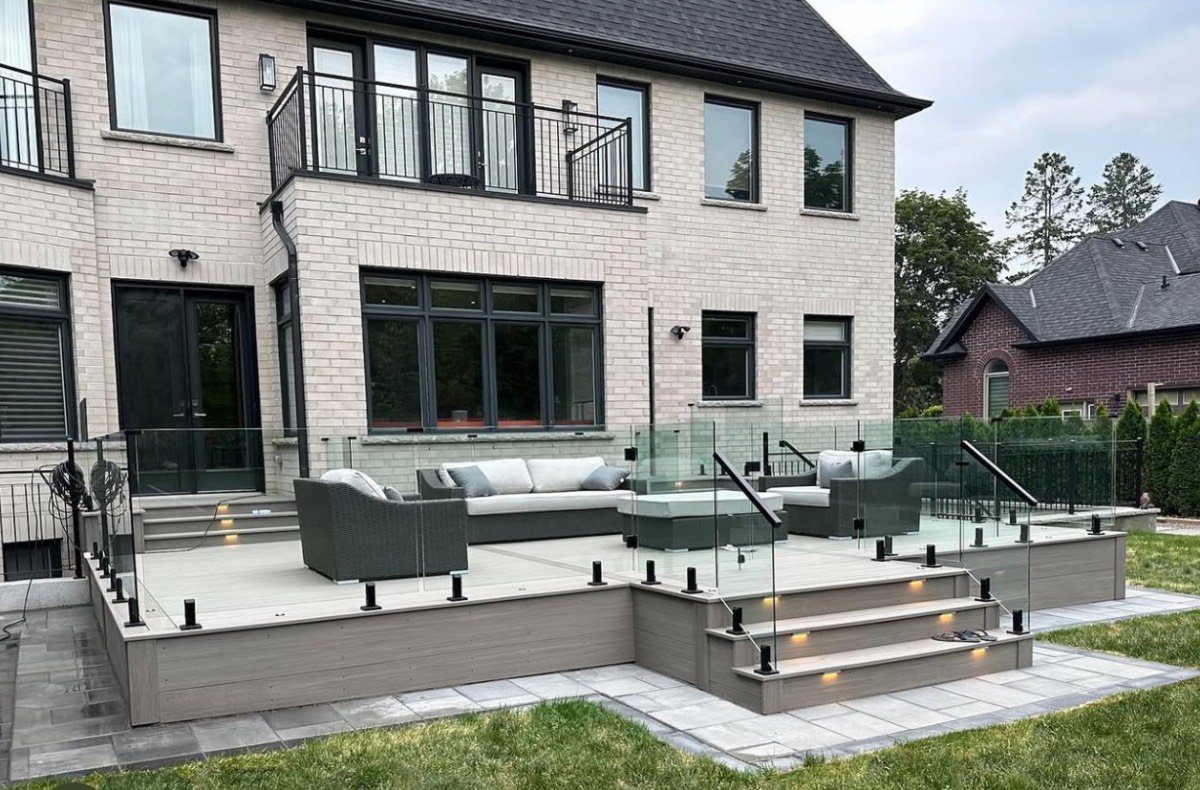
If that is the lane you are in, here is how we handle a composite deck build in Ottawa. They come in a wide range of colours and wood-grain looks, and the colour runs consistent board to board.
PVC takes the same idea further. With no wood content at all, it is the lightest, most moisture-proof and most fade-resistant of the group, which makes it a strong pick for spots near a pool or in full sun.
It carries the highest up-front price of the four, and to some feet it reads a touch more like a manufactured surface than natural timber, though modern grain textures have narrowed that gap a lot.
One honest note on feel underfoot: darker composite and PVC boards can get warm in direct summer sun, so colour choice matters if the deck bakes all afternoon. Both families shrug off Ottawa winters well, resisting the moisture swings that make wood cup and crack. Most of these products are backed by manufacturer warranties on fade and stain, which is worth reading alongside the workmanship warranty on the build itself.
What do the four materials cost in Ottawa?
Published 2026 Canadian ranges put composite and PVC at roughly $100 to $130 per square foot installed, cedar at $60 to $90, and pressure-treated at $35 to $60. Those are installed figures, not board prices, so they already carry the framing, footings and labour underneath the surface you walk on.
Read the gap as a trade, not a penalty. The composite and PVC premium buys down a decade of staining and sealing you would otherwise pay on wood, and most homeowners recover the difference within 8 to 12 years. If you plan to sell before then, the wood families keep more money in your pocket. Our full Ottawa deck-cost guide works through the whole build.
| Material | Installed cost per sq ft | What the price buys |
|---|---|---|
| Pressure-treated | $35 to $60 | The lowest entry cost, paid back in cleaning and re-staining |
| Western red cedar | $60 to $90 | Natural grain and a cooler surface, with light upkeep |
| Composite | $100 to $130 | No sealing or staining, and a wash twice a year |
| PVC | $100 to $130 | The same low upkeep, plus the best moisture and fade resistance |
How do you match the material to how you use your yard?
Start with honesty about maintenance. If you will happily spend a spring weekend refreshing the finish, pressure-treated or cedar keep more money in your pocket up front. If you would rather never think about it again, composite or PVC cost more at the start and hand those weekends back to you.
Then think about how the space gets used. A busy family deck with kids, pets and bare feet leans toward composite or PVC for their splinter-free, low-fuss surface. A quiet, shaded sitting deck where you love the smell and look of real wood leans toward cedar.
A large entertaining deck near a pool points to PVC for its moisture and fade resistance. And a first deck on a tighter budget, with plans to upgrade later, makes pressure-treated a perfectly reasonable call.
Sun and shade matter too. A deck in blazing all-day sun favours lighter board colours to keep the surface comfortable underfoot, whatever family you choose. These are the kinds of details we walk through with you before anything is ordered, so the deck suits your real life, not just a showroom sample.
Can you see your deck before we build it?
Choosing a material is easier when you can actually see the finished deck. As your Ottawa deck builder, every Ottawa Decking Solutions project is designed in 3D and AutoCAD before we build, so you approve the exact layout, board colour, railing and stairs, and an honest price, up front. No guesswork, no surprises halfway through.
We build for Ottawa's freeze-thaw cycles, harsh winters and humid summers, with a written workmanship warranty spelled out in your signed project agreement. Your deck may need a City of Ottawa permit; we handle the permit drawings and bylaw setbacks as part of the build so you do not have to chase paperwork. If spreading the cost helps, third-party financing is available through our partner iFinance.
We are a family-owned, locally owned, licensed and insured contractor serving Ottawa, Kanata, Barrhaven, Orleans, Nepean, Stittsville and Gloucester. When you are ready to talk through your options, reach us at (613) 902-6137 or info@ottawadeckingsolutions.ca, or visit us at 110 Bentley Ave.
Common questions
What deck material holds up best in Ottawa winters?
Composite and PVC handle Ottawa's freeze-thaw cycles and moisture swings with the least fuss, because they resist the cupping and cracking that affect real wood. Cedar and pressure-treated perform well too, but they are timber, so they move with the seasons and need periodic cleaning and re-staining to hold up and hold their colour.
How much maintenance does a pressure-treated deck need?
Cleaning and re-staining or sealing every couple of years. Left bare it will grey, and boards can cup, check or crack over time. It is the most affordable of the four families up front and asks the most ongoing attention, so the sticker savings today are partly repaid in weekends later.
What is the difference between composite and PVC decking?
Composite blends wood fibres with plastic and wraps them in a tough protective shell. PVC has no wood content at all, which makes it the lightest, most moisture-proof and most fade-resistant of the group, and also the highest priced. PVC is a strong pick for spots near a pool or in full sun.
Do composite decks get hot in the sun?
Darker composite and PVC boards can get warm in direct summer sun. If your deck bakes all afternoon, lighter board colours stay more comfortable underfoot, whichever material family you choose.
Should I choose cedar or composite?
Choose cedar if you want the look and feel of natural wood, warmer colour and cleaner grain, and you do not mind light upkeep to keep it glowing. Cedar also stays cooler and smoother underfoot than most materials on a hot afternoon.
Choose composite if you would rather wash it a couple of times a year and never think about sealing or staining, which suits a busy family deck with kids, pets and bare feet.