

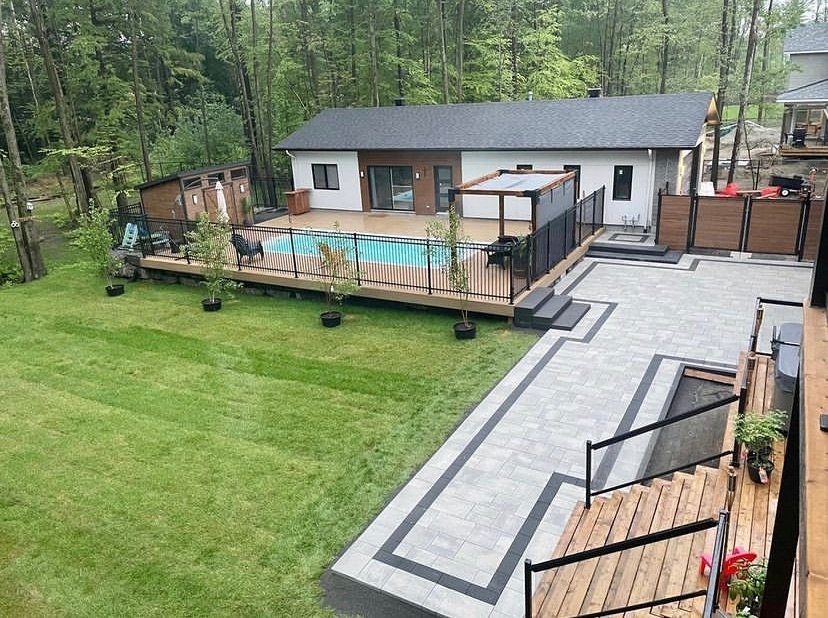
Interlock contractor in Ottawa: patios, walkways and driveways.
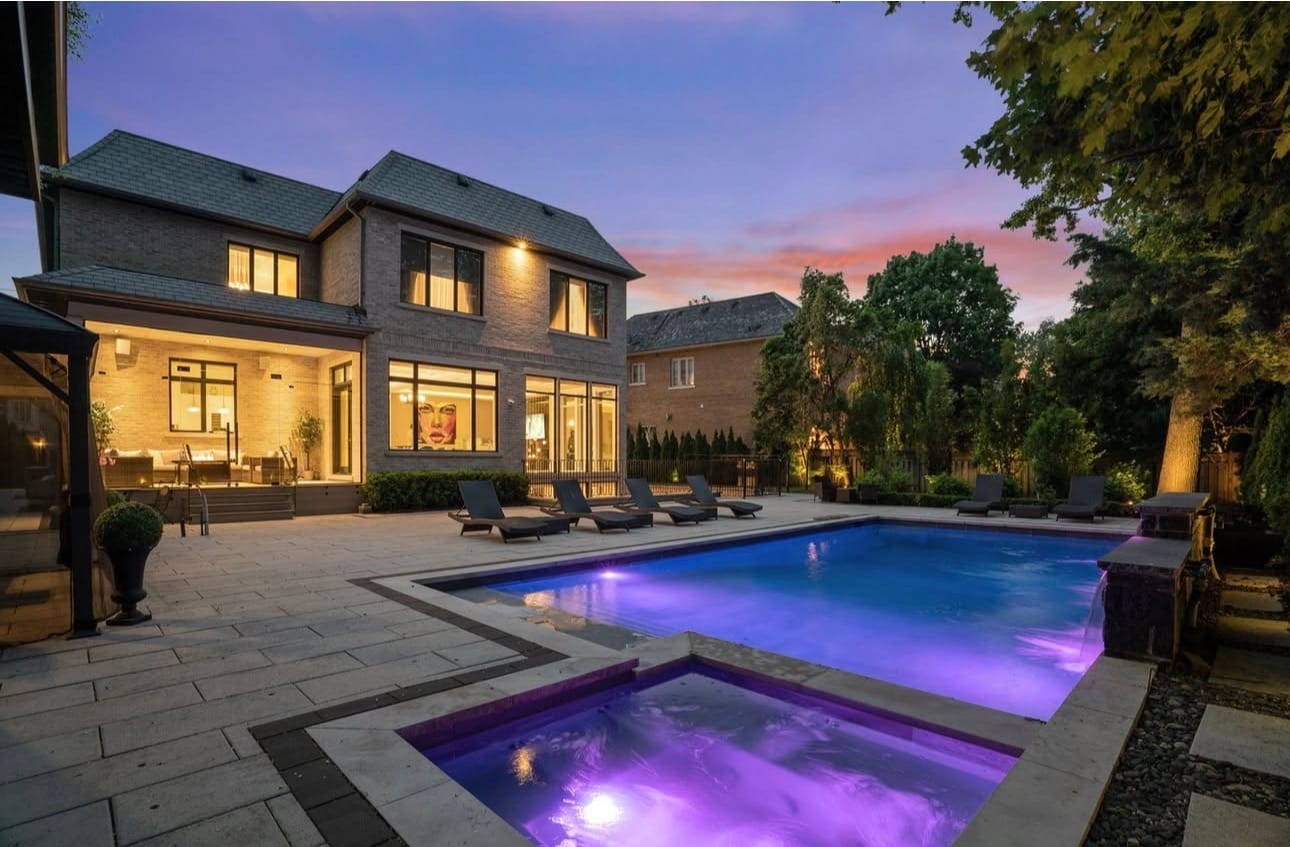
Ottawa Decking Solutions is an interlock company in Ottawa and Gatineau. We build patios, walkways, interlock driveways and retaining walls in Techo-Bloc and Permacon interlocking stone, plan full landscaping around them, and do interlock repair when a section sinks. Engineered for our freeze-thaw winters, built to drain, settle evenly and look right for decades. We also cover interlock in Kanata and Stittsville and interlock in Orleans and east Ottawa. Where the patio runs to a pool, the pool cabana and the stone are one design.
The layout
We build every interlock and stone system, and design the whole thing in 3D before a single stone is laid.
Hardscaping and landscaping, planned as one design.
We design the grade, the drainage and the layout before we lay a single stone, so your patio, steps and walkways work together and stay level through Ottawa winters.
Patios and walkways
Techo-Bloc and Permacon pavers laid on a deep compacted base, with the slope designed in so meltwater runs away from the house instead of pooling at the door.
Driveways
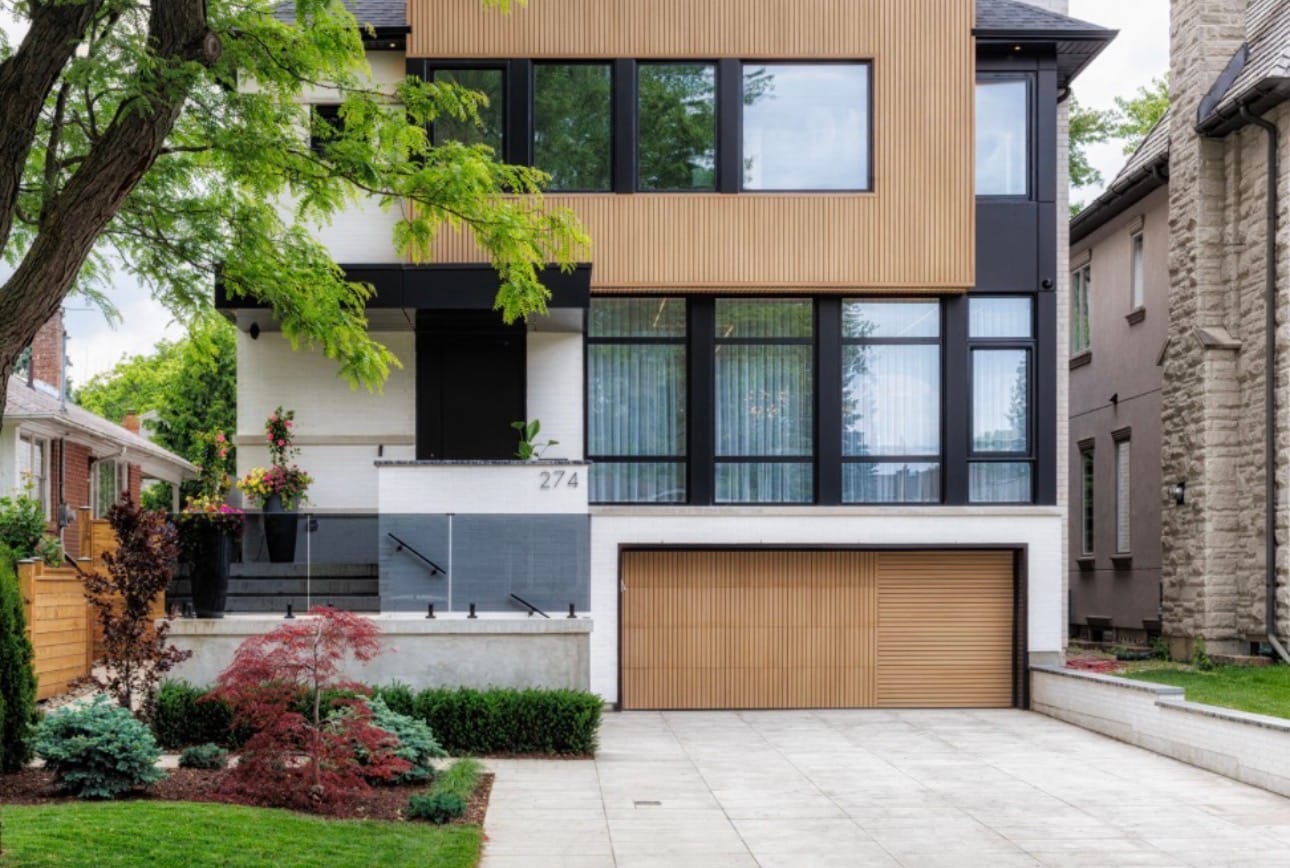
Built on a thicker base than a patio needs, because it has to carry vehicle load. If a paver settles we lift it, correct the base and reset the same stone, so a repair does not leave a visible patch.
Retaining walls and steps
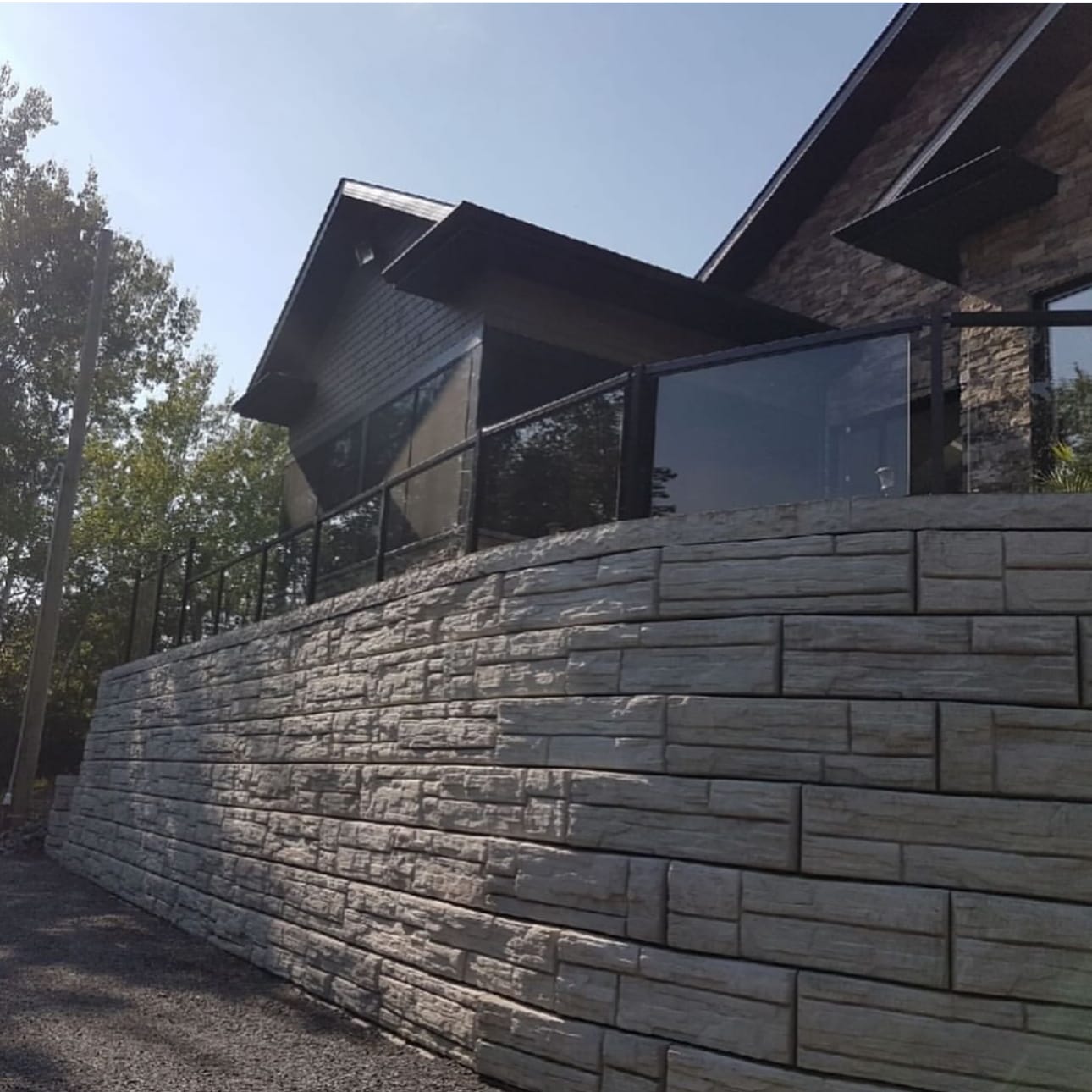
Engineered block walls that hold a grade and drain properly behind the face. That drainage is what prevents the bulging you see on walls built without it.
Landscaping and design
Front and back yard layouts drawn in 3D first, so stonework, planting and lighting are planned as one piece instead of added on year after year.
Interlock repair
Sunken, rutted or heaved sections lifted, the base corrected underneath and the same stone relaid, with the downspout or grade that caused it dealt with first.
Interlock repair
Interlock repair in Ottawa: common problems we fix
Interlock is built to be repaired in place. When a paver settles or lifts, we take up the affected stones, correct and re-compact the base underneath, and reset the same pavers, so the fix blends in instead of leaving a visible patch. It is the same base-first method we use on every driveway and patio we build.
The most common interlock problems come down to the same few things: a settled or heaved section of patio, walkway or driveway apron, a base that has shifted and needs correcting, or joints that have lost their sand and need re-sanding with polymeric sand to lock the surface back together. Because interlock is modular, we work on the affected area rather than tearing out the whole surface. Our guide walks through how an interlock repair actually works, and how to tell a repair from a rebuild. For what we look at on a visit and what moves the price, see our interlock repair service in Ottawa.
Driveways
Widening a driveway? The City has a say.
A patio in your own backyard is between you and your yard. A driveway is different, because the part where it meets the street sits in the City’s right of way. Ottawa requires an access permit to construct, modify, close or remove a vehicular access, so widening a driveway, or moving where it meets the road, is a permit question before it is a paver question.
The City also caps the total width of all accesses, vehicular and pedestrian together, at 50 per cent of the property frontage they sit on. That is the rule that quietly decides how wide a double driveway can be on a narrow lot. Worth knowing before you settle on a layout.
We measure the frontage at the consultation and draw the driveway in 3D and AutoCAD, so what you approve is something that can actually be built. Right-of-way rules change, so we confirm the current requirement against your plan rather than against a driveway laid ten years ago. Ask any interlock contractor you are shortlisting whether they have looked at your frontage at all. Interlock, interlocking, paving stone: the word varies, the base work underneath does not.
A driveway often ends at a new building. A detached garage big enough to park in needs a building permit of its own, and its apron wants the same vehicle-load base as the driveway, dug in the same excavation rather than a second one a year later. Our custom garage builder in Ottawa page covers the garage side. Where the stone runs to a cooking area instead, the base under an outdoor kitchen in Ottawa is built for the counter from the start. Everything we build around the stone is on our outdoor structures page.
Source: City of Ottawa, Driveways and walkways: know the rules
Ask about an interlock drivewayEngineered to last
Why our interlock stays level.
Excavate and grade
We set the slope so water drains away from the house.
Compacted base
A deep gravel base, compacted in lifts so nothing settles.
Bedding sand
A screeded setting bed for a dead-true surface.
Pavers and polymeric sand
Locked joints that resist weeds, ants and frost heave.
Selected work
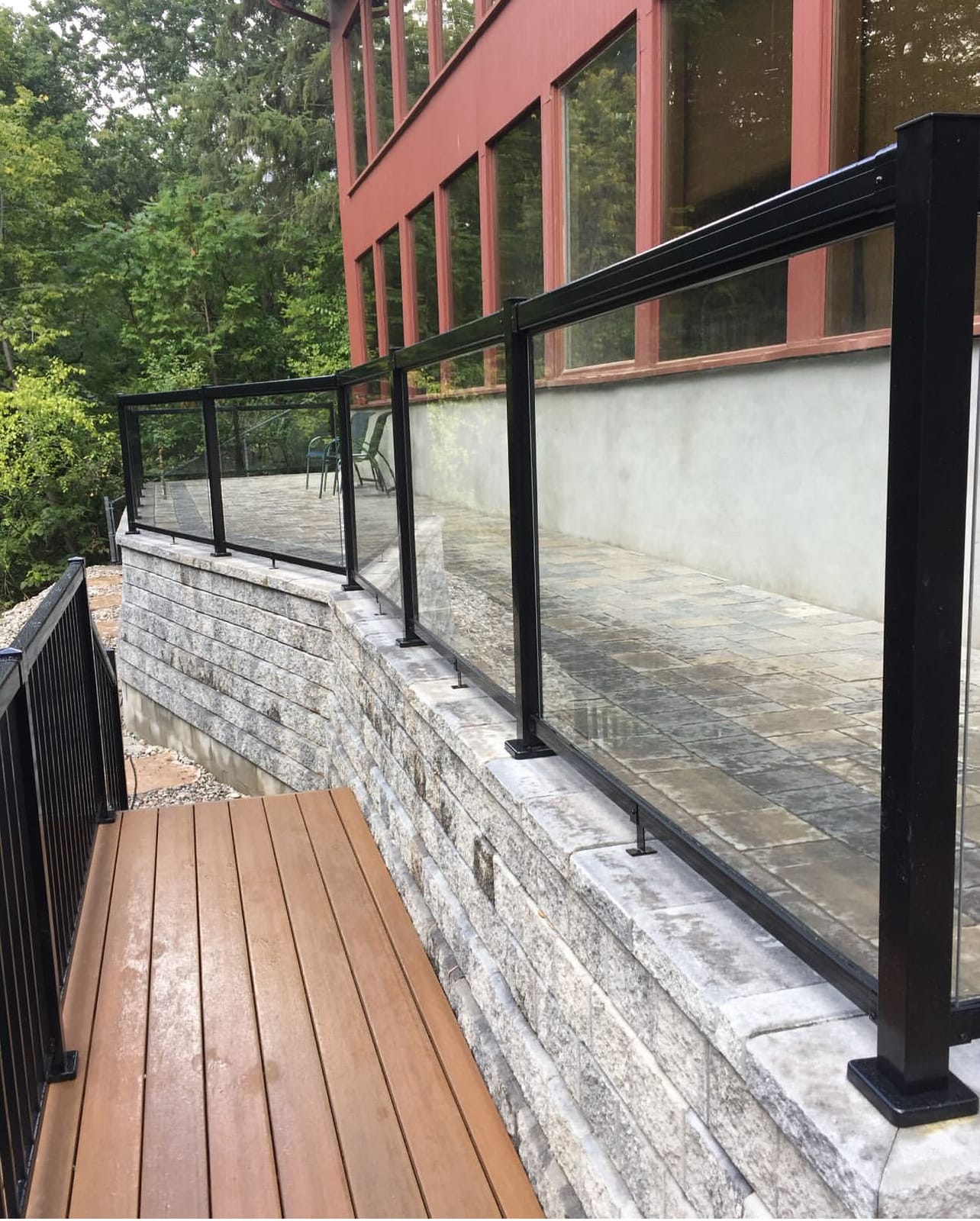
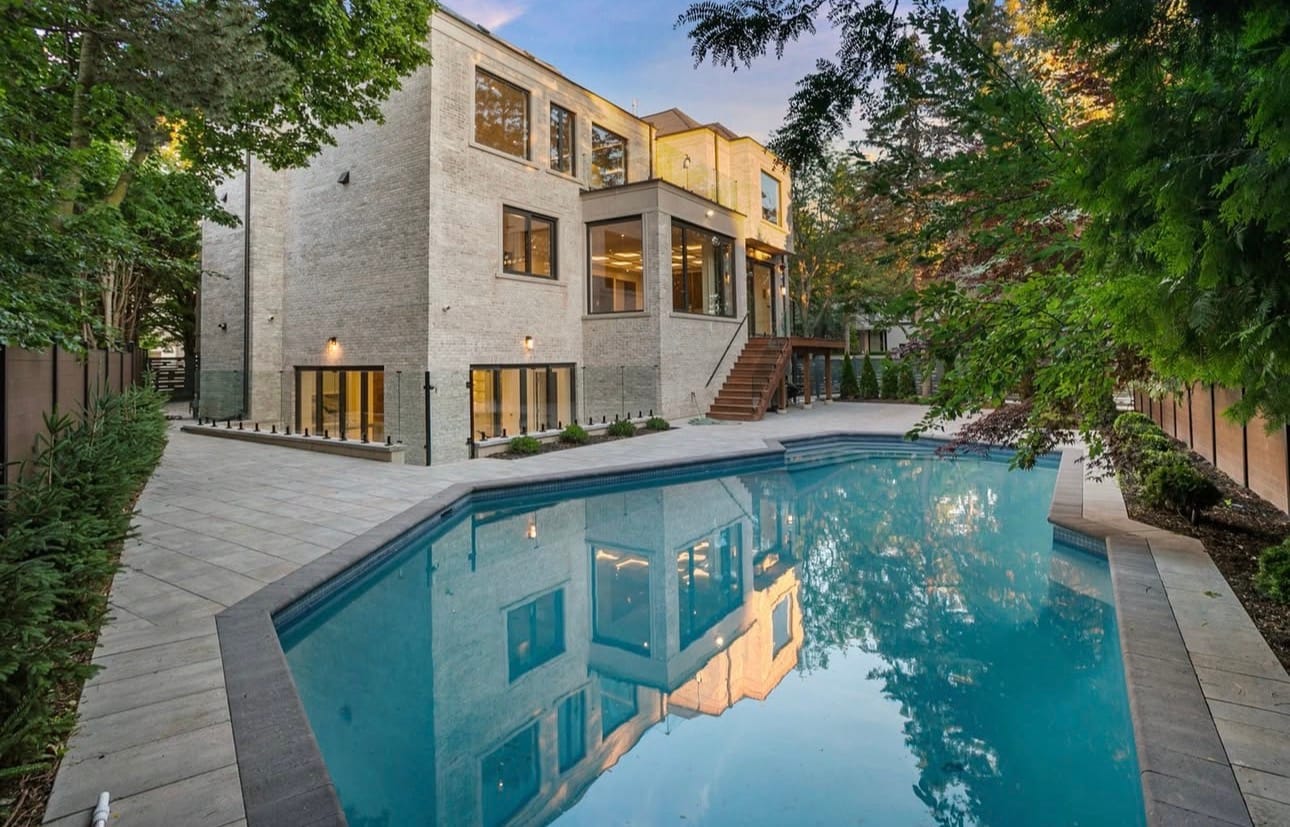
Recent interlock projects
The Ottawa Decking difference
You see your interlock in 3D, before we build.
We design it in 3D. Your space modeled in 3D and AutoCAD, so you change it on screen, not after it is framed.
You approve the plan. A clear design and an honest price up front, no surprises once we start.
One crew builds it. Framed true and finished to stand up to the freeze and thaw, backed by a written workmanship warranty.
On a sample $26,000 build. Real terms come from our financing partner, iFinance, never an offer of credit on this page.
Good to know
Interlock questions, answered.
Most of it happens below the surface you will see. We draw the layout in 3D and AutoCAD, excavate, and set the grade so water runs away from the house. Then comes the base: gravel compacted in thin lifts, and Techo-Bloc's own FAQ recommends 6 to 8 inches of it under a patio, with more under a driveway because it carries a vehicle. A screeded bed of bedding sand goes on top, then the Techo-Bloc or Permacon pavers, then polymeric sand swept into the joints. That sand is water-activated, so it needs dry, above-freezing days, and Hanover's installation guidelines keep foot traffic off it for 24 hours and cars for at least 48. In Ottawa, that is what closes the season in late fall, well before the ground itself freezes.
We do not publish a square-foot price for interlock. An Ottawa quote turns on things we measure on site: how deep the dig goes and what is underneath it, how much base the use needs, the stone and finish you choose, the cuts a pattern needs, the edge restraint, and whether a machine can reach the work. A driveway adds the width the City allows on your lot and, for a new or wider access, the City's access permit, $208 in 2026. We found no Ottawa-only installed figure with a named source. The nearest named benchmark is a Canada-wide contractor survey Techo-Bloc published in July 2026, which our Permacon and Techo-Bloc guide sets out with its limits. You get one price, against a 3D design you have already approved.
The City regulates two parts of an interlock job directly. A driveway meets the street in the City's right of way, so building, widening, closing or removing a vehicular access needs an access permit under the Access By-law (No. 2026-139). The 2026 fee is $208, processing takes about six to eight weeks, and relaying the same footprint does not need one. The City also caps the total width of all accesses at 50 per cent of the lot frontage. The second is height: under the City's Building Code Services advisory, a retaining wall, stair or landing more than 1 metre high needs a Part 4 engineering design, and a building permit and a guard follow where the structure provides access to the house and meets one of the advisory's height or slope tests. We check both against your plan before we quote.
Ask how deep the base will be and how many lifts it is compacted in, because the base is what keeps the surface level through freeze-thaw. Ask where the water goes: the City of Ottawa's lot grading guidance says to extend a downspout at least four feet from the foundation onto a permeable surface such as grass, and a downspout that empties onto the stone is how the same corner keeps sinking. Find out which exact Techo-Bloc or Permacon product is going down and read its warranty, because the two differ: Techo-Bloc's residential warranty is for life and covers surface damage from de-icing salt, while Permacon's runs 50 years, prorated, and excludes surface damage from misused salt. Neither pays for labour, so ask for the workmanship warranty in writing too.
A properly built base is what keeps interlock stable through our freeze-thaw cycles, and that is where we focus most of the work that never shows once the project is finished. We excavate to the right depth and build the base up in compacted lifts so water drains and the ground moves evenly instead of pushing unevenly on the surface above it. When the foundation is done right, your patio, walkway or driveway stays flat and true season after season, and if a paver ever does settle, it can be lifted, the base corrected, and the same stone reset rather than replacing the whole surface.
We dig out the area, then build the base up in thin compacted lifts rather than one loose layer, which is what gives the surface its strength and its resistance to freeze-thaw movement. On top of that we screed a level bed of bedding sand and set each Techo-Bloc or Permacon unit into it, then lock the joints with polymeric sand once the pattern is laid. A driveway gets a thicker base than a patio because it has to carry vehicle load, and the slope is designed in from the start so meltwater runs away from the house instead of pooling at the door. This layered approach is built for Ottawa soil and the freeze-thaw movement that comes with our winters.
Polymeric sand is a jointing sand that hardens once it is swept into the gaps and wetted, locking the pavers together so they move as one surface instead of shifting individually. Because it sets firm, it helps keep the joints stable and discourages weeds and ants far better than plain sand, which washes out and leaves an open gap over time. A stray seed can still land on the surface and take root, but occasional sweeping and topping up the polymeric sand every so often keeps the joints looking clean and locked. It is a small, low-cost part of the build that does a lot of the long-term work.
Sealing is optional. It can deepen the colour, add a slight sheen and make cleaning easier, but a well-built patio or walkway holds up fine without it, since the durability comes from the base and the pavers, not the sealer. Day-to-day maintenance is light: sweep it, rinse it, and top up the polymeric sand from time to time as it wears. If a paver ever settles or is damaged, individual units can be lifted and reset rather than replacing the whole surface, which is one of the biggest practical advantages interlock has over a poured concrete slab or asphalt.
Interlock flexes with our freeze-thaw ground instead of cracking like a poured slab, because it is made of many individual pavers on a compacted base rather than one rigid piece, and single units can be lifted and reset if one ever settles. Poured concrete and asphalt usually cost less up front, which is a fair reason people choose them, but the trade-off is that a crack cannot be un-cracked, and a patch tends to show and keep moving. Over the full life of the surface, interlock is generally the higher up-front investment that is built to be repaired in place rather than torn out and redone. We walk through the full trade-offs in our interlock-versus-concrete guide so you can weigh both honestly for your yard.
Yes. We build retaining walls and steps with Techo-Bloc and Permacon block, set on a compacted base with proper drainage behind the face so the wall holds back soil and handles our winters without bulging or shifting. Quality interlock and stonework is a long-term investment that holds up well for years when the base is built correctly, and because it is modular, a settled or damaged unit can be reset rather than replacing the whole wall or surface. Every project comes with a written workmanship warranty, with the exact terms set out in your signed project agreement, and we design retaining walls in 3D and AutoCAD first so you approve the exact height, layout and finish before we dig.
Yes. When a paver settles or lifts, we take up the affected stones, correct and re-compact the base underneath, and reset the same pavers, so the repair does not leave a visible patch. The same base-first approach handles a settled section of patio, walkway or driveway apron, and where the joints have washed out we re-sand them with polymeric sand to lock the surface back together. Because interlock is modular, we work on the affected area rather than tearing out and replacing the whole surface, which is one of the biggest practical advantages it has over a poured concrete slab that cannot be un-cracked.
When the base is built correctly, interlock is a long-term investment that holds up well for years. We excavate to the right depth and build the base up in compacted lifts so water drains and the ground moves evenly, which keeps a patio, walkway or driveway flat and true season after season through our freeze-thaw cycles. And because it is modular, if a unit ever does settle it can be lifted and reset rather than replacing the whole surface, so it can be kept in good shape over a long Ottawa timeline.
Go deeper
Interlock vs. poured concrete and asphalt: which lasts in Ottawa?Read the guide How much does an interlock driveway cost in Ottawa?Read the guide Sunken pavers and washed-out joints: when an interlock relay beats a rebuildRead the guide Permacon or Techo-Bloc in Ottawa: who makes them, where to see them, and what differsRead the guideService areas
Interlock across Ottawa and Gatineau
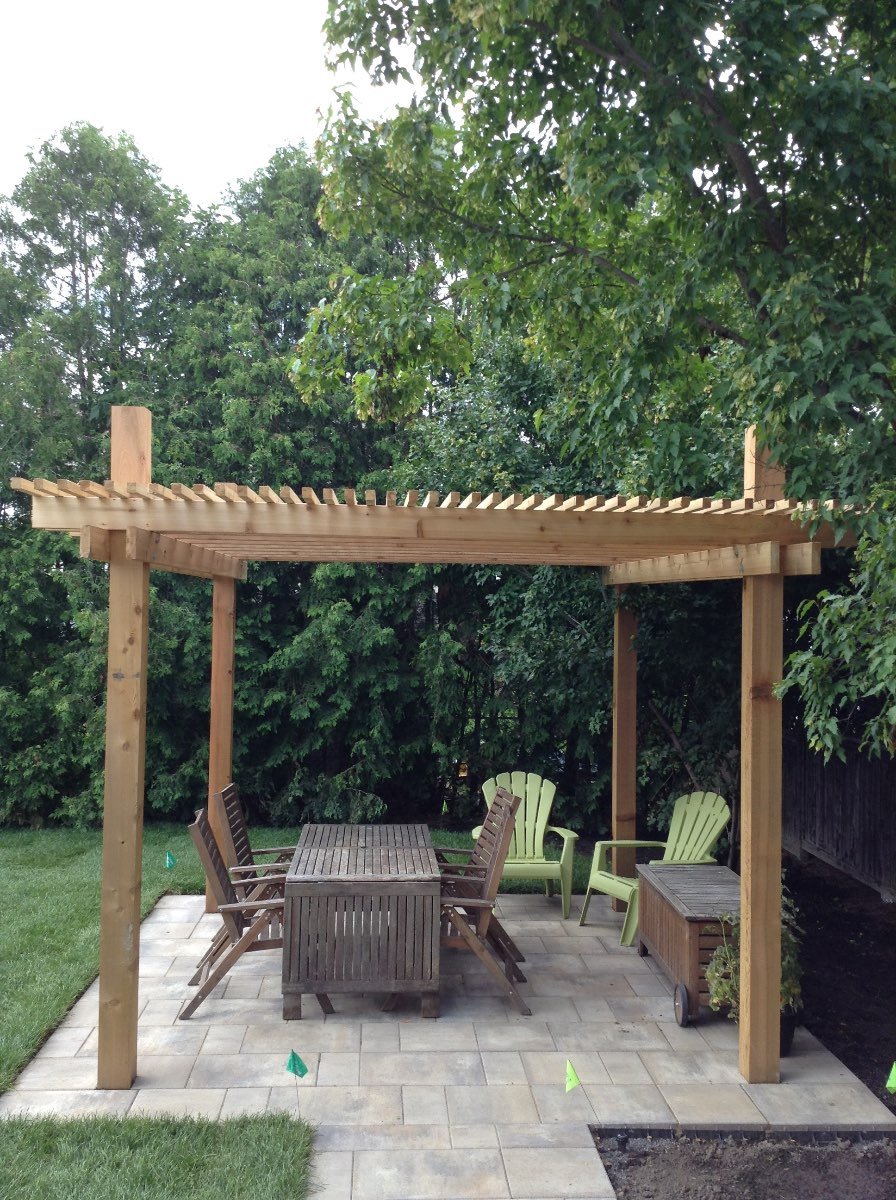
Patios · Driveways · Retaining walls · Landscaping
Ready to ground your backyard in stone?
Book a free consultation and we will design your interlock in 3D before you commit.
5.0 on Googlefrom 25 reviews