

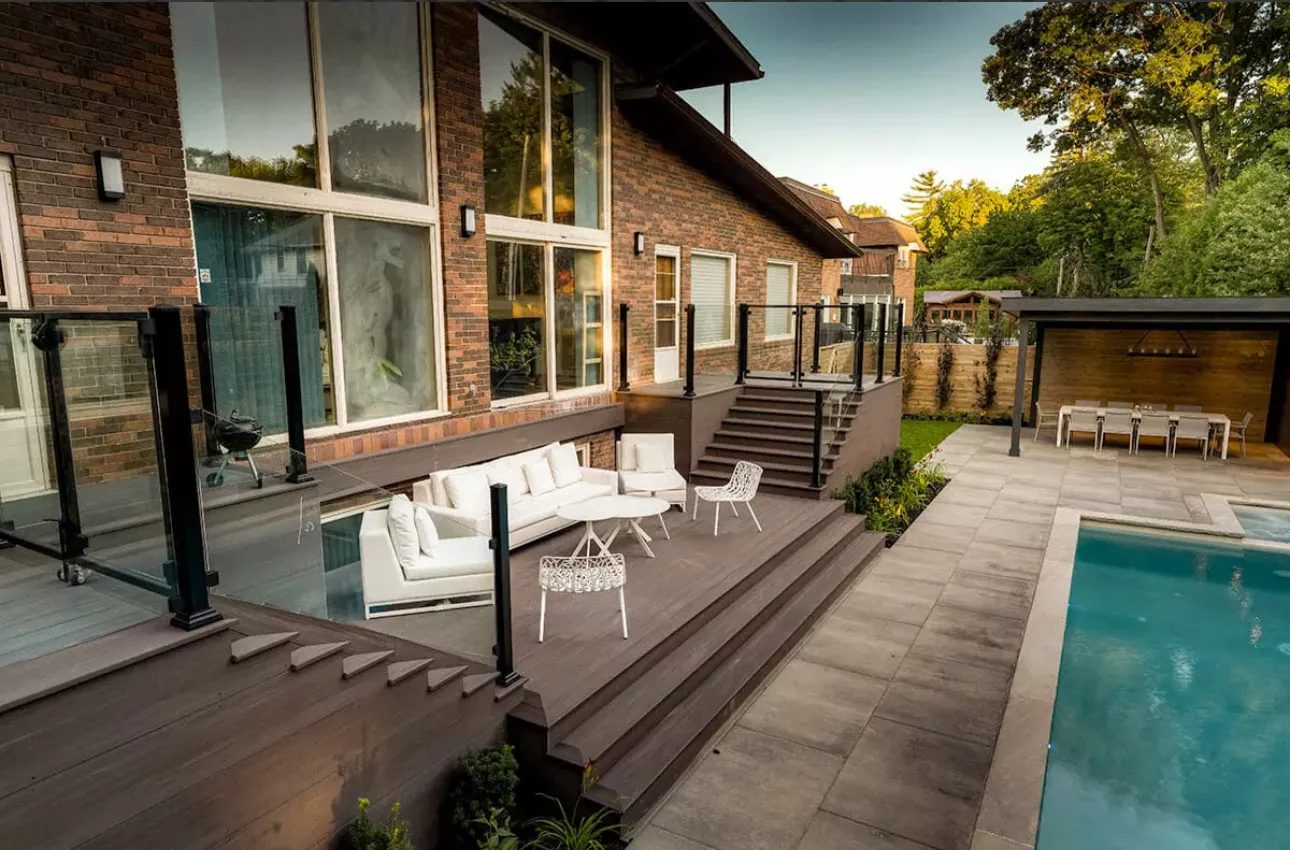
Deck materials in Ottawa: what each one costs, and when the City needs a permit.
Ottawa Decking Solutions is a deck builder in Ottawa building custom decks in composite, cedar, pressure-treated and PVC for homeowners across Ottawa and east Ottawa, including Orleans, Gloucester and Vanier. From a simple ground-level platform to a multi-level deck with a pergola and lighting, every project is designed in 3D before a single board is cut, built to handle the freeze and thaw. Where the deck carries the cooking, we build the outdoor kitchen into the same drawing.
The build
We build every decking material, and design the whole thing in 3D before a single board is cut.
Every deck material, one experienced crew.
We build in pressure-treated and cedar wood, and in the leading composite and PVC lines, so your deck matches your budget, your look and how long you want it to last.
Composite decking
Wood fibre and plastic under a tough outer shell. No sanding, sealing or staining, just a wash a couple of times a year, and the colour stays even through freeze-thaw. We build in Trex, Fiberon and TimberTech.
Cedar decks
Western red cedar for warm colour and clean grain, and it stays cooler and smoother underfoot than most boards on a hot afternoon. Re-oil it every couple of seasons to hold the tone, or let it weather to silver.
Pressure-treated decks
The most affordable way to get a solid, code-built deck underfoot. Strong, and easy to extend later. It asks for cleaning and re-staining every couple of years to handle Ottawa's wet, dry and freezing swings.
PVC decks
All plastic with no wood content, so it is the lightest, most moisture-proof and most fade-resistant of the four. The strongest pick beside a pool or in full afternoon sun. We build in Azek and Clubhouse.
What it costs
What a deck costs in Ottawa
There is no single sticker price, because size, material, structure and whether the City of Ottawa needs a permit all move the number. As a guide, published 2026 Canadian ranges run from about $35 per square foot for pressure-treated up to $130 for composite or PVC, installed. We design your deck in 3D first, then give you one honest, project-specific price.
Read the full Ottawa deck cost guide| Material | Installed cost per sq ft |
|---|---|
| Pressure-treated wood | $35 to $60 |
| Western red cedar | $60 to $90 |
| Composite (Trex, Fiberon, TimberTech) | $100 to $130 |
| PVC (Azek, Clubhouse) | $100 to $130 |
Permits
Do you need a permit for your deck in Ottawa?
Most deck pages in this city say they handle the permits and then decline to say what triggers one. Here are the City’s conditions, in its own words. Any one of them is enough.
- The structure has a building area of over 10 square metres (approximately 108 square feet). The City states that a building permit is required for the construction of a new building, an addition, or alteration of any building or structure past that size.
- If the deck is adjacent to or attached to the house and its walking surface is more than 600 mm (24 in.) above the adjacent grade, a permit is required. Size does not exempt it. A small landing off a back door can cross this line.
- If the deck is an elevated deck providing principal access to a building a permit is required. No height or area exemption applies. This is the one that catches walkout and second-storey decks.
- If the deck is independent from the house (eg. is in the middle of the yard) and has a walking surface greater than 10 square metres (approximately 108 square feet) in area and its walking surface is more than 600 mm (24 in.) above the adjacent grade, a permit is required. The freestanding case needs both tests to be true, which is why a low platform in the middle of a yard often does not need one.
Source: City of Ottawa, Decks: do I need a building permit? The City also publishes its own sundeck plan checklist and sample.
The City sets these rules and can change them, so we confirm current requirements against your plan rather than against what a neighbour built. Where a permit is needed we prepare the drawings, file the application and work to the bylaw setbacks as part of the build. The 3D model is what that application needs.
A structure beside the deck answers to a different rule. The City’s accessory building checklist puts a detached garage, gazebo or pool house over 10 square metres (108 square feet) under a building permit of its own, prefab included. So a pool cabana in Ottawa or a custom garage is a permit question in its own right, and an outdoor kitchen on the deck changes what the framing has to carry. How the pieces fit together is on our outdoor structures in Ottawa page.
Do you need a permit for a deck or fence in Ottawa?Deck repair
Deck repair in Ottawa: what usually needs fixing
Not every deck needs replacing. Ottawa’s freeze-thaw cycle is hard on a deck in a specific order: the boards grey and cup first, fasteners work loose as the wood moves, and the framing and footings underneath are usually the last thing to go. A deck whose structure is still sound can often be brought back with new boards, re-secured framing and a fresh stain, rather than a full rebuild.
The common jobs are the same few things: replacing split, rotted or cupped deck boards, repairing or reinforcing joists and beams that have taken on water, re-securing a railing that has gone loose, swapping fasteners and hardware that have rusted or backed out, and re-staining a wood deck that has weathered. Where a deck has moved because its footings were never set below the frost line, that is a structural problem rather than a surface one, and we will tell you plainly which of the two you are looking at. The full picture, including staining and honest repair-or-replace advice, is on our deck repair in Ottawa page.
Pick your material
Four ways to build your deck.
Pressure-treated
- Most affordable
- Classic wood look
- Refinish every few years
Cedar
- Naturally warm tone
- Resists rot and insects
- Light yearly upkeep
Composite
- Trex, Fiberon, TimberTech
- Almost no maintenance
- Holds colour for decades
PVC
- Clubhouse, Azek
- Fully synthetic
- Best moisture resistance
Selected work
Recent deck projects
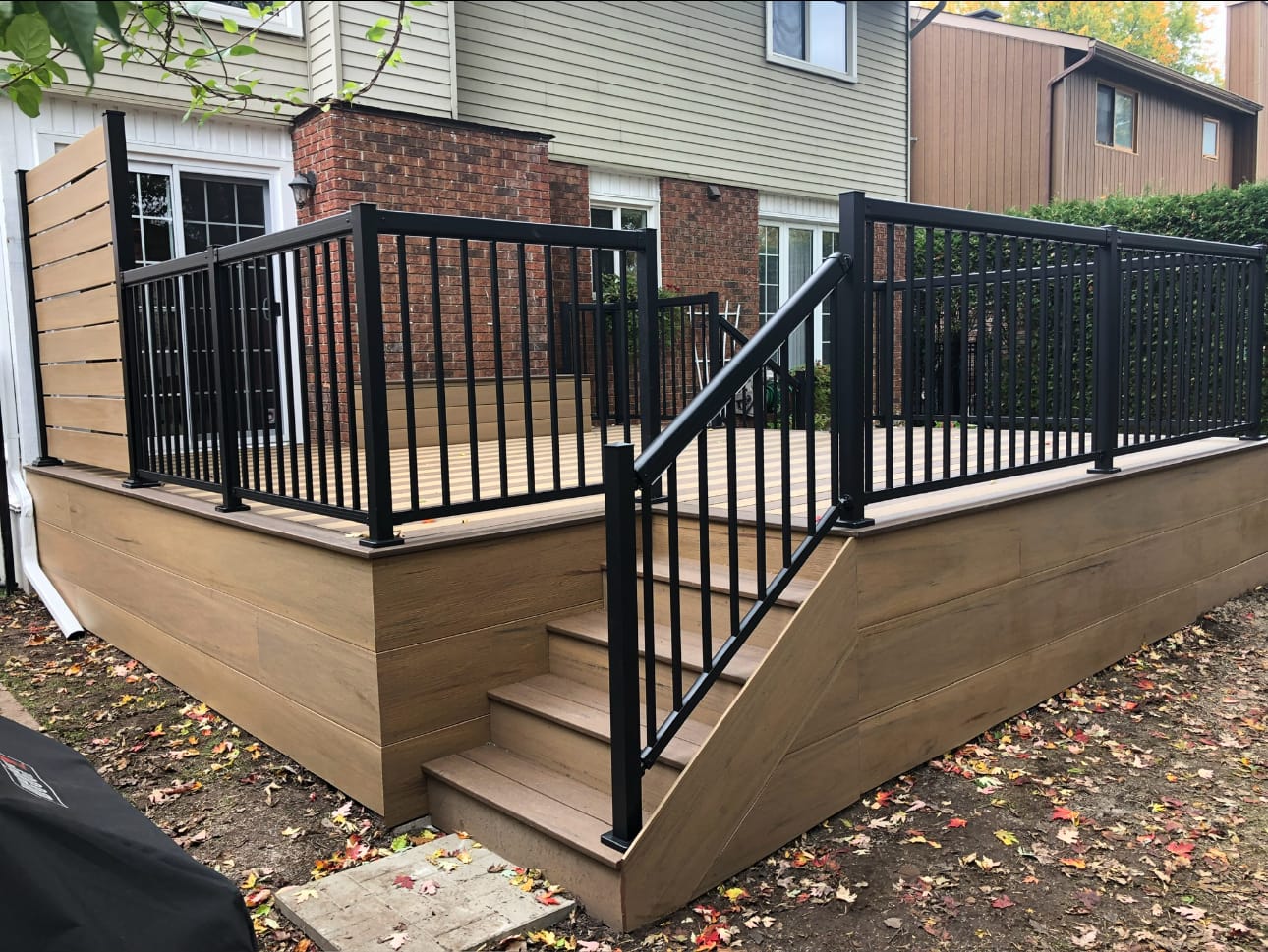
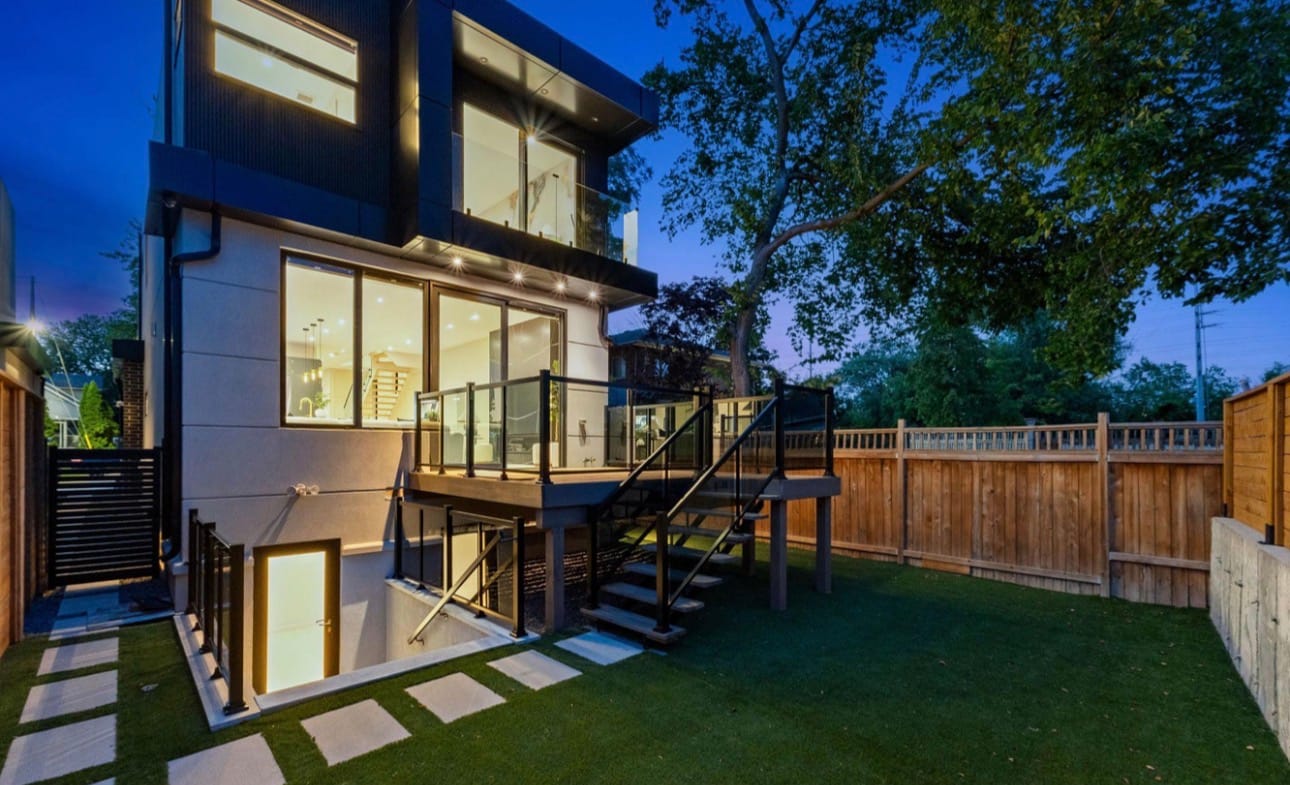
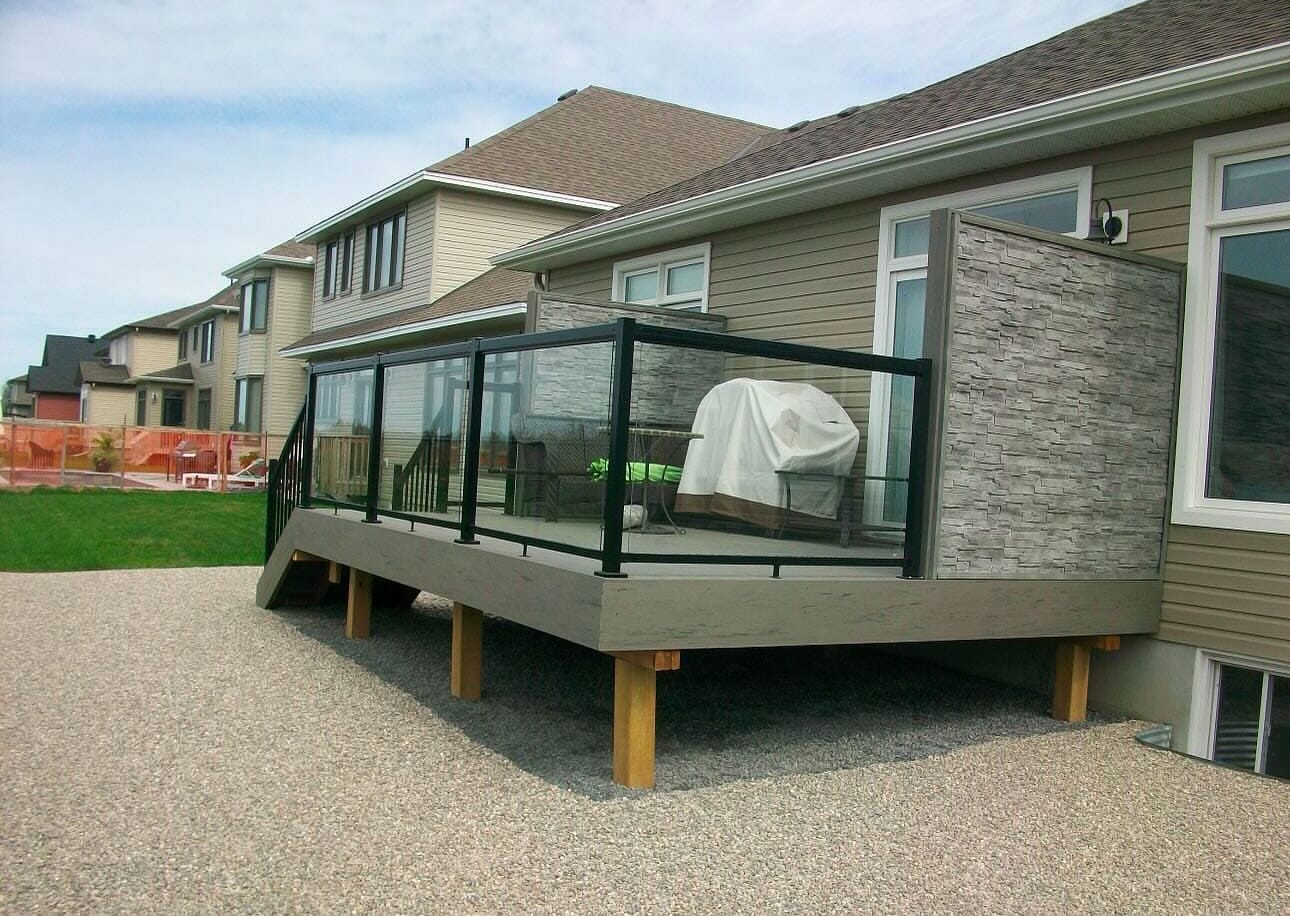
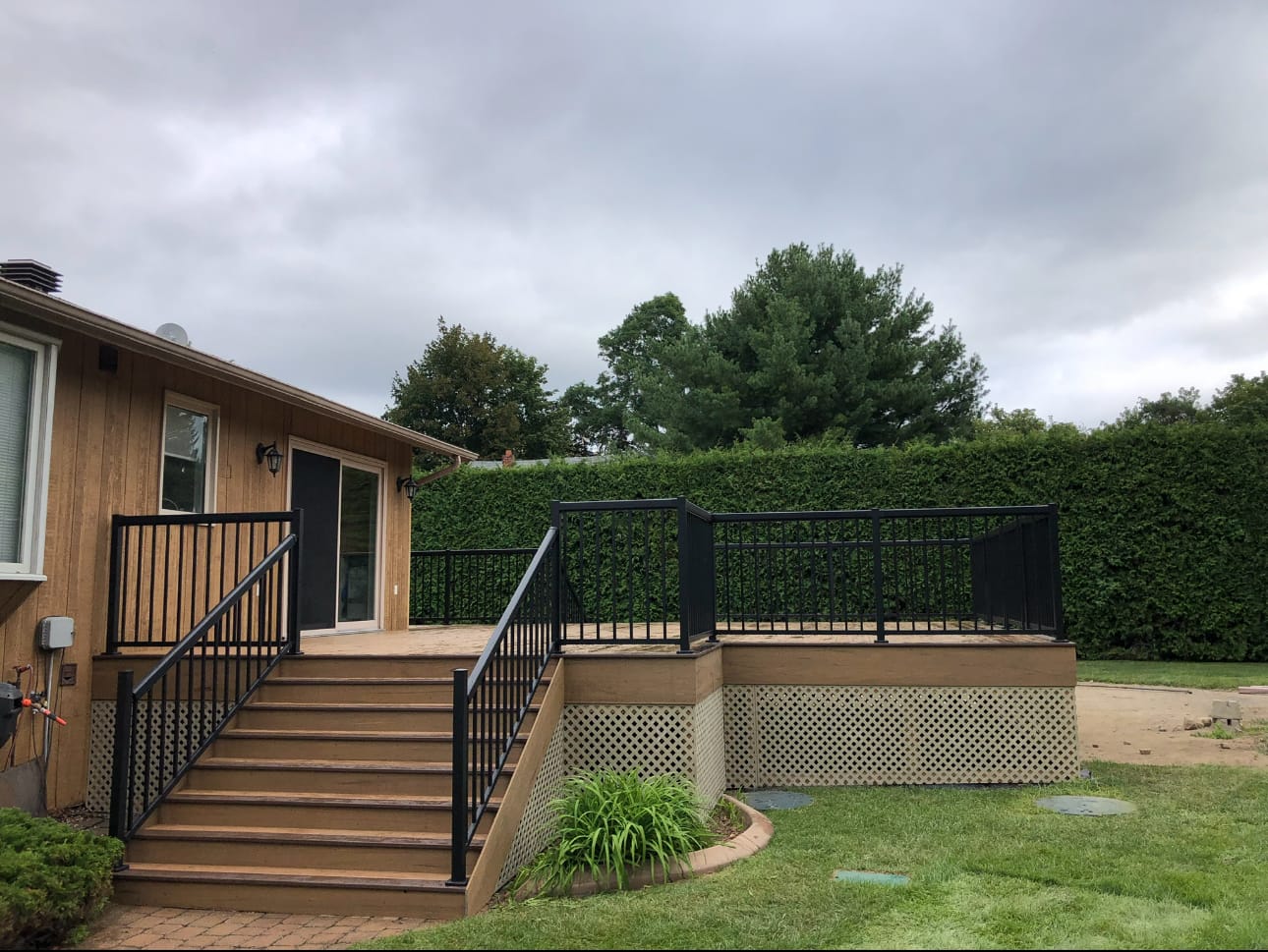
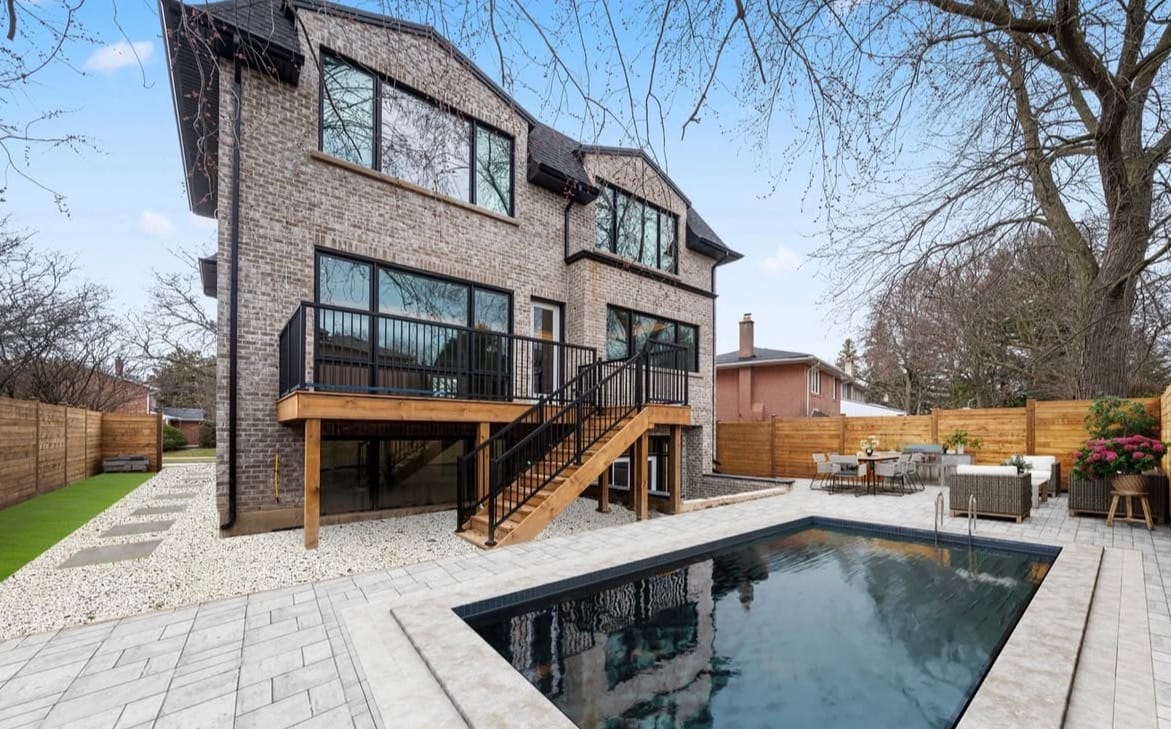
The Ottawa Decking difference
You see your decks in 3D, before we build.
We design it in 3D. Your space modeled in 3D and AutoCAD, so you change it on screen, not after it is framed.
You approve the plan. A clear design and an honest price up front, no surprises once we start.
One crew builds it. Framed true and finished to stand up to the freeze and thaw, backed by a written workmanship warranty.
On a sample $26,000 build. Real terms come from our financing partner, iFinance, never an offer of credit on this page.
Good to know
Decks questions, answered.
We do both. A lot of Ottawa decks that look finished are actually repairable, because the freeze-thaw cycle tends to damage a deck from the top down: the boards grey, split and cup first, fasteners work loose as the wood expands and contracts, and the framing and footings underneath are usually the last part to fail. If the structure is still sound, replacing the damaged boards, re-securing the framing and hardware and re-staining the surface can give you back a deck you want to use without the cost of a full rebuild. The honest exception is a deck that has shifted because its footings were never set below the frost line, which is a structural problem rather than a surface one, and no amount of new decking will hold it still. We look at the framing and the footings before we quote anything, and we will tell you plainly which of those two situations you are in rather than selling you the bigger job.
It comes down to what the framing and the footings are doing, not how the surface looks. Boards are the cheapest part of a deck to change, so grey, splintered or cupped decking on its own is rarely a reason to tear the whole thing out. The questions that actually decide it are whether the joists and beams are still sound or have taken on water and gone soft, whether the posts and footings are still sitting where they were built, and whether the deck was framed to carry what you want to put on it now. If the structure is good, repair is almost always the better value. If the frame is rotting or the footings have heaved through a few Ottawa winters, repairs become money spent on something that will move again, and rebuilding is the cheaper answer over the life of the deck. We assess it in person before quoting, and because every build we design goes through 3D and AutoCAD first, you can see a rebuild costed properly against a repair and decide with real numbers in front of you.
They all have a place, and it comes down to your budget and how much upkeep you want to do. Pressure-treated wood is the most affordable to start and needs regular staining, while western red cedar is a natural wood that ages gracefully with some care. Composite boards from Trex, Fiberon and TimberTech resist rot and fading with little maintenance, and PVC from Azek and Clubhouse is fully synthetic and the lightest on upkeep. All four hold up to Ottawa's freeze-thaw winters when the framing and footings are built properly, and composite and PVC boards typically carry their own manufacturer warranties on fade and staining, on top of our written workmanship warranty on the build itself. We design your deck in 3D and AutoCAD first, so you can compare the look and an honest price across every material before choosing.
Pressure-treated and cedar are real wood, so plan on cleaning and re-staining from time to time, while composite and PVC just need an occasional wash. Real wood generally wants attention every couple of years to keep its colour and stop it from greying, while composite and PVC boards are built to resist that fading without any sealing or painting at all. Our decks are built for Ottawa's freeze-thaw cycles, harsh winters and humid summers, starting with proper framing and footings set below the frost line so the structure does not move with the seasons. Composite and PVC boards resist moisture, rot and fading, which helps them handle the swing from icy Januarys to muggy Julys, and every project is backed by a written workmanship warranty regardless of the material you choose. We build composite decks in Trex, Fiberon and TimberTech, and PVC in Azek and Clubhouse, all chosen for how they perform through that freeze-thaw swing.
Many decks do, depending on their height, size and how they attach to the house, though some smaller ground-level builds may not. Because those thresholds are set by the City of Ottawa and can change, we always confirm the current requirements for your specific plan rather than relying on what a neighbour built a few years ago. If your project needs a permit, we handle the drawings, the application and the bylaw setbacks as part of the build, and because every deck is already designed in 3D and AutoCAD before we start, those same drawings are what the permit application needs. If it does not need one, we tell you plainly so you are not paying for paperwork you do not need. Whether you are building in Kanata, Barrhaven, Orleans, Nepean, Stittsville, Gloucester or elsewhere in Ottawa, the same City of Ottawa process applies, so we walk you through it either way.
Timelines depend on the size, materials, design and whether the project needs a City of Ottawa permit, so we give you a realistic schedule once your plan is set and any permit paperwork is accounted for. Matching your home is exactly why we design every project in 3D and AutoCAD before a single board is cut, so you approve the exact colour, layout, railings and stairs that suit your house and yard, rather than guessing from a sample board. Whether you are in Kanata, Barrhaven, Orleans, Nepean, Stittsville, Gloucester or elsewhere in Ottawa, you see the finished look before we start, and the build is backed by a written workmanship warranty with the terms set out in your signed project agreement. We build in composite, cedar, pressure-treated and PVC, and each material affects the schedule a little differently, which is another reason we set the timeline once your material and design are locked in rather than upfront.
Yes to both. We offer a written workmanship warranty, with the exact duration and terms laid out in your signed project agreement, and brands like Trex, Fiberon, TimberTech, Azek and Clubhouse carry their own manufacturer warranties on the boards themselves, which is worth reading alongside the workmanship warranty on the build. Financing is available through our third-party partner iFinance if it helps spread the cost of a larger project, though any figure we mention in conversation is illustrative only and not an offer of credit. As a family-owned, licensed and insured Ottawa company, we are happy to walk you through both the warranty terms and the financing option in detail when we meet for your consultation. We serve Kanata, Barrhaven, Orleans, Nepean, Stittsville, Gloucester and the wider Ottawa area, and every deck is designed in 3D and AutoCAD first, so the warranty and financing conversation happens once you already know exactly what you are building.
A raised deck suits sloped or uneven yards and gives you a level outdoor room off the house, while a ground-level interlock patio in Techo-Bloc or Permacon stone works well on flatter ground and needs no framing or footings below the frost line. A deck also gives you a walkout at door height without building up the yard, while interlock reads as an extension of the ground itself and can wrap around a pool or tie a driveway, walkway and patio into one design. Some yards genuinely suit a mix of both, a deck off the house stepping down to an interlock patio further back. We design either option in 3D and AutoCAD first so you can see it before deciding, and we cover the full freeze-thaw and cost comparison in our separate interlock guide.
Size, material tier, structure and permits drive most of the cost. A larger footprint, a second level, built-in stairs, custom railings and any lighting or pergola add-ons all add labour and material beyond a simple ground-level platform, and a deck that needs a City of Ottawa permit carries the added time of preparing drawings and an application. Material tier matters too: pressure-treated is the most affordable per square foot, cedar sits above it, and composite or PVC cost the most up front in exchange for close to no maintenance. For context, industry cost guides such as RenoQuotes' 2026 Canada deck-cost guide put installed composite or PVC decking at roughly $100 to $130 per square foot and pressure-treated at roughly $35 to $60, though those are national industry ranges, not an Ottawa Decking Solutions quote. We do not publish a fixed price list because every yard, base condition and design is different; we design your deck in 3D and AutoCAD first so you see the exact layout and get one honest, project-specific price before you commit, and financing is available through our third-party partner iFinance if it helps spread the cost.
Published 2026 Canadian ranges put installed composite and PVC decking at roughly $100 to $130 per square foot, versus about $60 to $90 for cedar and $35 to $60 for pressure-treated. Those are national industry ranges, not an Ottawa Decking Solutions quote. Because size, structure, railings, lighting and whether the City of Ottawa needs a permit all move the number, we do not publish a fixed price list. We design your deck in 3D and AutoCAD first, so you see the exact layout and get one honest, project-specific price, and financing is available through our third-party partner iFinance if it helps spread the cost.
PVC asks the least of you. It is all plastic with no wood content, so it is the lightest, most moisture-proof and most fade-resistant of the four, followed closely by composite in Trex, Fiberon and TimberTech, which needs no sanding, sealing or staining, just a wash a couple of times a year, with the colour staying even through freeze-thaw. Cedar and pressure-treated are real wood, so they need cleaning and re-oiling or re-staining every couple of seasons to hold their colour through Ottawa's wet, dry and freezing swings. Whichever you choose, every deck is built to handle the freeze-thaw and backed by a written workmanship warranty.
Go deeper
Composite, cedar or pressure-treated: choosing your Ottawa deckRead the guide How much does a deck cost in Ottawa?Read the guide Trex vs Fiberon vs TimberTech vs Azek: which composite or PVC deck is best for Ottawa?Read the guide When is the best time to build a deck in Ottawa?Read the guide Frost depth in Ottawa: how deep deck and fence footings need to goRead the guideService areas
Decks across Ottawa and Gatineau
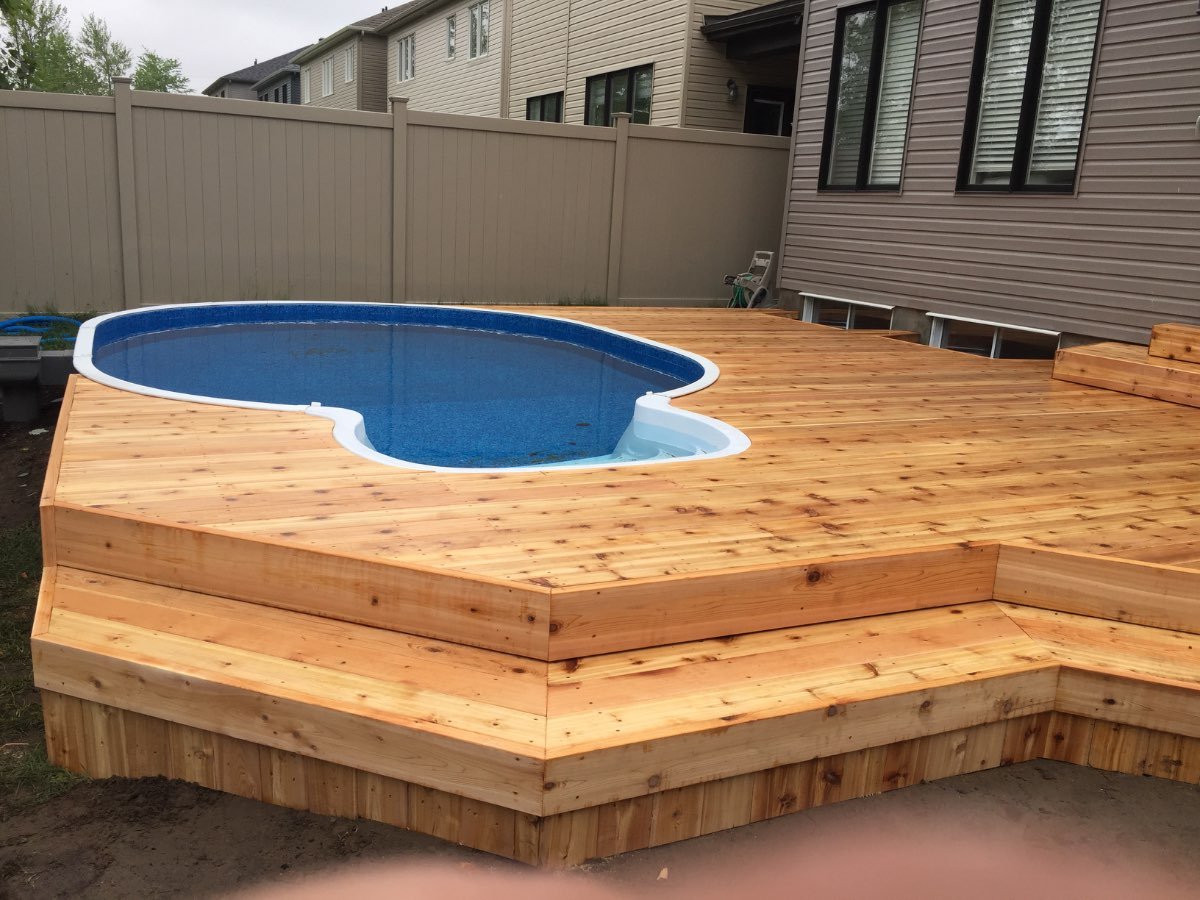
Composite · Cedar · Pressure-treated · PVC
Ready for a deck you will actually use?
Book a free consultation and we will design your decks in 3D before you commit.
5.0 on Googlefrom 25 reviews