

Updated September 2026
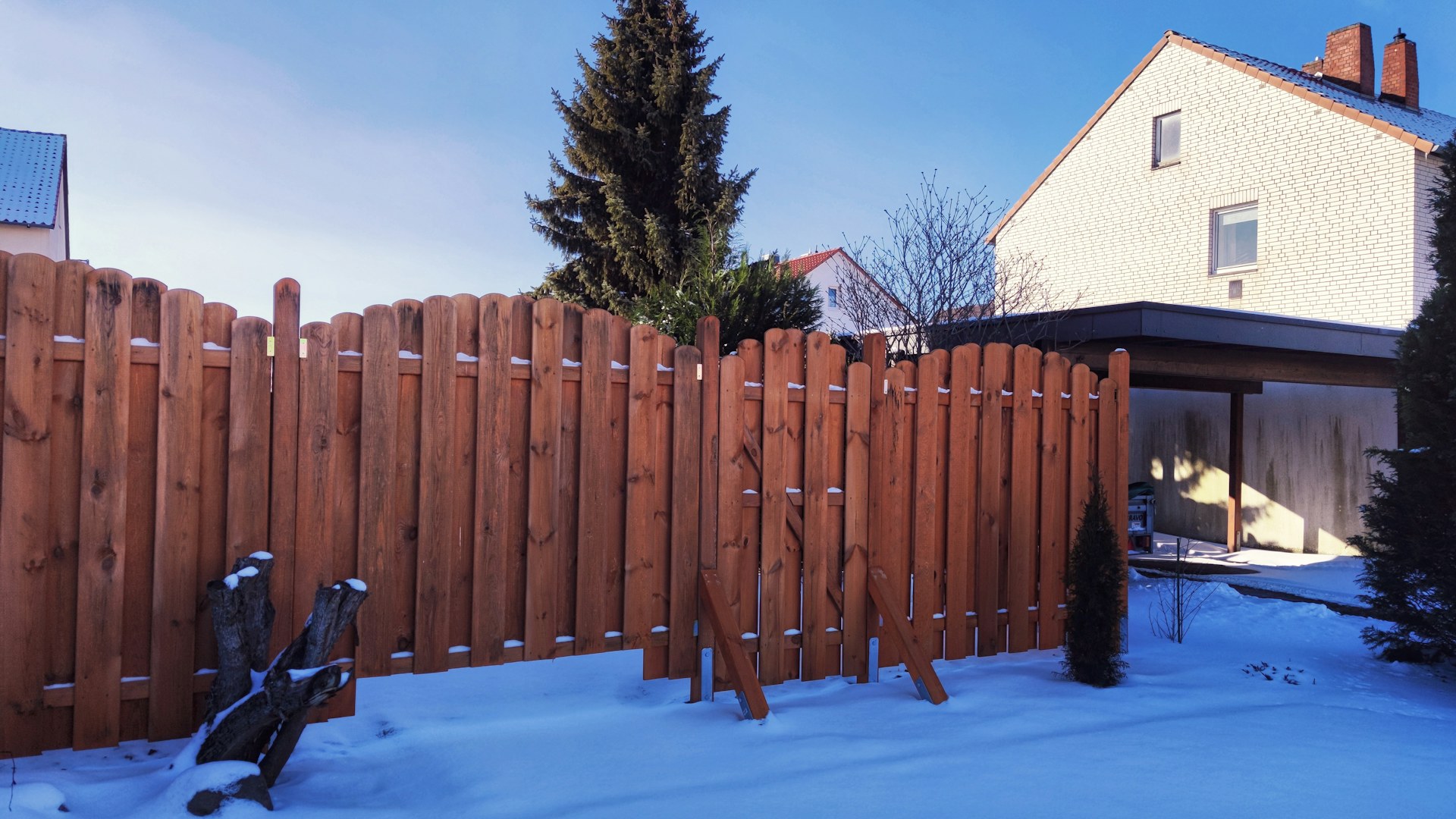
Fence repair in Ottawa is mostly post repair. A run that leans, a gate that stopped latching, a section that sits higher than its neighbours after the thaw: in this city those usually start with a post that the ground moved over the winter, or a post that rotted where it meets the soil. Boards and pickets are the easy part. So the first question on any repair is whether the posts can be reset or replaced one at a time. If they can, it is a repair. If most of them have moved, it is a new fence, and a new fence in Ottawa has to meet today's Fence By-law, even where the old one never did. Below: why Ottawa posts fail, what a repair involves, the by-law line between repairing and replacing, pool enclosures, who pays on a shared fence, and what repairs cost here.
Why do Ottawa fences fail at the posts?
An Ottawa winter freezes and thaws over and over. At the Central Experimental Farm, Environment and Climate Change Canada's 1981 to 2010 normals count about 52 days from December to March when the afternoon climbs above 0 °C, while the average overnight low stays below freezing in all four months. Every one of those days is a chance for water around a post to thaw and freeze again.
Frozen ground pushes up on a post, and in Ottawa's clay it also grabs it. The National Research Council measured this in Leda clay on its own land in Ottawa and found that setting a column below the frost line does not keep it still if the soil freezes to its sides. We go through that study, and what it means for depth, in our guide to frost depth and footings in Ottawa. For a fence, that means depth alone does not stop heave.
The second failure is rot at the grade line. The few centimetres of post at the soil surface stay wet longer than the wood above them and dry out more often than the wood below, and that is where a wooden post usually breaks off. The posts look fine from the yard until a wind load or a pushed gate snaps one there.
HomeStars, in its Ottawa fence cost guide updated 2026-08-21, puts it plainly: repairs in Ottawa often involve frost heave damage, including leaning or shifted posts that need resetting. The boards are usually a symptom.
Source: Environment and Climate Change Canada, climate normals, Ottawa CDA · NRC: Penner and Irwin, Adfreezing of Leda clay to anchored footing columns (1969)
What can be repaired, and what the repair involves
We look at the posts before we quote any fence installation and repair in Ottawa, because the post decides everything above it. A new board nailed to a heaving post moves with it next winter. A gate rehung on a post that is still leaning will drag again by spring.
The table below sets out the repairs we take on, what usually causes each, and what fixing it properly means.
New pressure-treated wood beside weathered wood reads as a patch for a season or two until the colours meet. On a short repair that is fine. On a long run with several bad posts, replacing a full section often looks better and costs less in labour than chasing individual posts along it.
| What you see | The usual cause | What fixing it properly means |
|---|---|---|
| A section leans or bows | One or two posts heaved or rotted at the grade line | Reset or replace those posts first, then straighten and refasten the panels |
| A gate drags or will not latch | The hinge post or latch post moved, or the gate frame racked | Plumb the post, then rehang or square the gate so it closes on its own |
| Posts snapped at the soil | Rot where the wood meets the ground | A new post in the same line, with the old stub dug out |
| Broken boards or pickets | Impact, or fasteners pulled out by a moving post | New boards, after checking the posts they hang on |
| A gap opening under the fence | Heave lifted the run, or the soil settled or washed out | Reset the posts; on a pool enclosure, close it before the pool is used |
When does a repair become a new fence under the by-law?
This is the rule that decides a lot of Ottawa repair jobs. Fence By-law No. 2003-462 took effect on 1 January 2004, and section 23 lets a fence lawfully built under a former municipality's fence by-law before then stay and be maintained. A replacement is a new fence, and a new fence has to meet 2003-462.
Older fences can fail today's limits. Section 5 caps a residential fence at 1 metre in the front yard and 213 cm in any other yard. Section 6 lets a gate in a side or rear yard go 30 cm over that, and a decorative post cap 15 cm. So an old fence that stands taller than those limits can be repaired and kept, but rebuilt, it comes down to 213 cm. Note that a fence sold as 7 feet is 213.36 cm, just over the limit.
Two more sections catch old fences when they are replaced. Section 18 requires chain link on residential property to be vinyl or powder coated, so a bare galvanized chain link fence can be kept in repair but not put back in the same material. And section 15 puts the finished side toward the street and the neighbours, so the posts and rails of a new fence face your own yard.
Where the two sides of a fence sit at different levels, section 3 measures height from the higher side, and grade does not include artificial embankments or berms. That catches rebuilds on a sloped lot, where the new fence is measured from whichever side sits higher, yours or the neighbour's.
The by-law does not say where maintenance ends and replacement begins. If you are about to rebuild most of an old fence that is taller than today's limits, ask the City through 3-1-1 first rather than after. Section 12 also cuts the other way: the by-law requires every fence to be kept in good repair, safe and structurally sound, and under section 29 it is enforced by the City's by-law officers, with complaints going through 3-1-1. A fence does not need a building permit in Ottawa unless it encloses a pool, and our guide to deck and fence permits in Ottawa covers that side of it.
| Rule | The limit | Section |
|---|---|---|
| Front yard height | 1 m | s.5(1) |
| Any other yard | 213 cm | s.5(2) |
| Gates in a side or rear yard | up to 30 cm over the limit | s.6(1) |
| Decorative caps on structural posts | up to 15 cm over the limit | s.6(3) |
| Driveway sight triangle, 2 m each way | 75 cm | s.4(2) |
| Chain link on residential property | vinyl or powder coated | s.18 |
| Older fences built under a former by-law | may stay and be maintained; a replacement meets 2003-462 | s.23 |
A pool fence is a repair with a deadline
Around a pool, a damaged fence is a by-law problem. Ottawa's Pool Enclosure By-law No. 2013-39 counts any outdoor pool or hot tub that can hold 600 mm of water, and section 20(b) says no opening through or under the enclosure may let a 100 mm sphere pass. A post that heaved and lifted the bottom rail can open exactly that gap.
Gates carry their own rule. Section 21 requires every gate in the enclosure to have a self-closing device, a self-latching device at least 1.35 m above the bottom of the enclosure, and a lock. Section 23 keeps every gate closed and locked except while the pool area is in use, and it applies to every enclosure in the City regardless of when it was built. So a gate that sagged and no longer swings shut on its own is the first repair on a pool fence, ahead of anything cosmetic.
The permit question depends on how much you change. The City's Pool Enclosure Guide says you may repair and replace parts of an existing pool enclosure without a new permit, while section 14(2) of the by-law requires a permit for every pool enclosure, replacement enclosures included. Schedule A, as amended by By-law 2026-148, sets that permit at $257. The City decides where replacing parts ends and replacing the enclosure begins, so a large rebuild is worth confirming before work starts. Our pool fences page covers what a new enclosure involves.
Source: City of Ottawa, Pool Enclosure By-law No. 2013-39 (PDF) · City of Ottawa, Pool Enclosure Guide (PDF)
Does my neighbour have to pay half of a fence repair?
No rule in Ontario makes a neighbour pay half automatically. The Line Fences Act sets up a dispute process for fences on a boundary line, and it covers two situations only: where there is no fence and one owner wants one built, and where a line fence exists and one owner believes it needs to be reconstructed or repaired. In either case an owner can ask the municipality for fence-viewers, three of whom view the fence and issue an award splitting responsibility for the work.
The order you do things in matters. The Ontario government's guidance to the Act, updated 2026-09-10, says the process does not apply if one owner, on their own initiative, has reconstructed or repaired an entire existing line fence and then wants to use it to make the neighbour pay part of the cost. Repair the whole shared fence first and ask for half afterward, and the Act will not help you.
The same guidance says a municipal council can exempt all or part of its area from the Act by by-law, and tells owners to contact their municipality to find out if one exists. For an Ottawa address, that is a 3-1-1 question. Fence-viewers also have no say over where the boundary is. A dispute about the line itself is for the owners to settle, usually with an Ontario Land Surveyor.
One situation has its own answer in the Act. Under section 22(1), when a tree falls on a line fence, the owner of the land the tree grew on removes it and repairs the fence. For everything else, the simplest route is the one the ministry points to: most neighbours agree without a formal viewing. Put the split in writing before any work starts.
Source: Government of Ontario, Line Fences Act guidance · Line Fences Act, R.S.O. 1990, c. L.17
What does fence repair cost in Ottawa?
We do not quote a repair without seeing the posts, because two fences with the same broken board can need one new board or a whole new section. For a published figure, HomeStars' Ottawa fence cost guide, updated 2026-08-21, gives two. In its section on fence repairs, labour and materials together typically cost $50 to $150 an hour, depending on fence type and access. For labour alone on lighter jobs like repairs or relocations, it puts the hourly rate at around $40 to $75.
The same guide lists winter conditions at $100 to $500 extra for snow removal or frozen ground work. A post reset in frozen clay is a harder job than the same reset in October.
For a whole fence, which is where a repair ends up when most of the posts have gone, HomeStars puts Ottawa fence projects at $3,000 to $12,000 or more, with the average at about $7,500. Those are HomeStars' figures for Ottawa, not a quote from us.
Source: HomeStars, How Much Does Fence Installation Cost in Ottawa? (updated 2026-08-21)
How to choose who repairs it
The Province's advice on home repairs is the right starting point: get written estimates from at least three contractors, and never accept an estimate over the phone or without the contractor inspecting the area. For a fence, inspecting means looking at the posts, not just the boards.
Three rules from the same Ontario page protect you once you pick one. Any home renovation contract worth more than $50 must be in writing. When the written estimate is part of the contract, the final price cannot be more than 10% over it unless you agree to new work or a new price. And the Province recommends keeping the deposit to no more than 10%, and never paying the full amount before the work is done.
Then ask the questions that separate a repair that lasts from one that comes back next spring. What will you do with the posts? How deep does a new post go, and how do you set it in clay? Is anything about my fence over today's by-law limits, and does your repair change that?
Source: Government of Ontario, Your rights when starting home renovations or repairs
Before anyone digs a new post hole
Replacing a post is digging, and digging in Ontario needs a locate first. Under the Ontario Underground Infrastructure Notification System Act, anyone who digs counts as an excavator, homeowners included, and no one digs until the utilities have marked their lines or cleared the dig. The request goes through Ontario One Call, and it is free.
Ontario One Call says the person physically doing the digging is responsible for the locates, so if we replace a post, we request them. Its homeowner page gives 5 business days for a standard request at a single address. What it does not cover is anything past the utility's demarcation point: a gas line from the meter to a barbecue or pool heater, or a wire from the house to a garage. Those are the owner's lines and need a private locate.
Trees are the other thing under a fence line. The City's Tree Protection By-law No. 2020-340 sets a City tree's critical root zone at 10 cm of radius for every 1 cm of trunk diameter, and section 12 bars work inside that zone that may injure the tree unless the City approves it in writing. On a street-side fence next to a City tree, a new post hole can fall inside it.
Source: Ontario One Call, Homeowners · City of Ottawa, Tree Protection By-law No. 2020-340
When to get a fence repaired
Spring is when leaning posts show up, because the thaw lets the ground settle back unevenly and the damage from the winter becomes visible all at once. It is also when everybody else notices theirs.
Fall is the better time to fix a post you already know is moving. The ground is still workable, a reset post gets a winter to prove itself, and a gate on a pool enclosure is sorted before the pool opens again.
If you are not sure whether yours is a repair or a rebuild, the two things worth doing before you call anyone are to push on the posts either side of the worst section and see which ones move, and to measure the fence's height in the yard it sits in. Those two answers settle most of it. Call us at (613) 902-6137 or book a visit, and we will look at the posts and tell you which one it is.
Common questions
Can a leaning fence post be fixed without replacing the fence?
Usually, yes, if only one or two posts have moved. The post is reset or replaced in the same line and the panels are straightened and refastened. When most posts along a run have heaved or rotted, replacing that section is the better repair, and a full replacement has to meet the current Fence By-law.
What is the maximum height allowed for a fence in Ottawa?
Under Fence By-law 2003-462, 1 metre in a front yard and 213 cm in any other yard of a residential property. Gates in side and rear yards may go 30 cm higher and decorative post caps 15 cm higher. Height is measured from the higher side where the ground differs, and a fence sold as 7 feet is just over the 213 cm limit.
Does my neighbour have to pay for half the fence in Ontario?
Not automatically. The Line Fences Act lets either owner of a boundary fence ask the municipality for fence-viewers, who can split the cost of building or repairing it. It does not apply if one owner repairs or rebuilds the whole line fence alone and then asks the neighbour to pay. Agree the split in writing before work starts.
What is the average cost of a fence in Ottawa?
HomeStars' Ottawa guide, updated 2026-08-21, puts fence projects at $3,000 to $12,000 or more, with an average of about $7,500, and repairs at $50 to $150 an hour for labour and materials. Frozen-ground work adds $100 to $500 by the same guide. Those are HomeStars' figures, not our quote.
Do I need a permit to repair a fence in Ottawa?
Not for an ordinary fence: fences need no building permit in Ottawa unless they enclose a pool. Repairing or replacing parts of an existing pool enclosure needs no new permit, according to the City's Pool Enclosure Guide, but a replacement enclosure needs a $257 permit. Designated heritage properties, and those in a Heritage District Overlay, are not covered by the City’s permit exemptions.
Which fence company is the best in Ottawa?
The one that looks at your posts before it prices your boards. Get three written estimates, as the Province advises, and none over the phone. Ask each company what it will do about the posts, how it sets a new post in clay, and whether anything about your fence is over today's by-law limits.