
Wrought iron, aluminium and vinyl fences then get a section of their own, with two more rules most homeowners never hear about. We build powder-coated aluminium pool enclosures across Ottawa that meet all of it.
The rule that decides your pool fence before you pick a single picket
Most pool fence pages in Ottawa will tell you the fence has to be five feet tall. That is the easy half. The rule that actually kills designs sits in Section 30 of the Pool Enclosure By-law, in the paragraph written specifically for wrought iron, aluminium and vinyl:
“have top and bottom rails spaced so that a minimum clear space of 1.2 metres is provided between the rails.”
Read that with a tape measure in your hand. On a 1.5 m enclosure it leaves you roughly 300 mm of total budget for both rails plus whatever sits above and below them. Any mid-rail, any decorative horizontal band across the middle of the panel, any two-rail ranch look, and the clear span drops under 1.2 m. The design is then non-compliant however tall it is.
The reason is not aesthetic. A horizontal member at mid-height is a step. Section 20(f) makes the same point from the other direction: nothing that helps a child climb may be fixed to the outside face of the enclosure between 140 mm and 900 mm from the bottom. The 1.2 m rail rule is that idea written as geometry instead of as a prohibition.
We read the pages ranking on the first page of Google for “pool fence ottawa” on 2026-08-24. Five of them render without JavaScript. Not one of the five states this rule. Two mention wrought iron and aluminium at all, and neither carries a number for either. It is the single most consequential specification for this material and it is missing from the entire first page.
That is the difference between a fence quote and a fence that passes. We lay out the panel to the rail rule first, then style it.
What the City of Ottawa actually requires
These are the enclosure specifications as written, not paraphrased, from Pool Enclosure By-law No. 2013-39, office consolidation, including amending by-laws 2014-115 and 2026-148.
| What | The requirement | Where it comes from |
|---|---|---|
| What counts as a pool | Any outdoor pool holding 600 mm or more of water at any point, hot tubs included | Part 1, definitions |
| Permit | Required before construction. All enclosures need one, replacements included. Fee $257.00 | s.14(1), s.14(2), Schedule A |
| Minimum height | 1.5 metres | s.20(a) |
| Gaps | No opening through or under the enclosure may pass a 100 mm sphere | s.20(b) |
| Distance from the water | Enclosure no closer than 1 metre to the nearest inside wetted surface of the pool wall | s.20(d) |
| Non-climbable zone | Nothing climbable fixed to the outside face between 140 mm and 900 mm from the bottom | s.20(f) |
| Gates | Self-closing device, self-latching device at least 1.35 m above the bottom, and a lock | s.21(b), s.21(c), s.21(d) |
| Double gates | One leaf must be fixed to the ground | s.22 |
| Aluminium, iron, vinyl | No opening between vertical members passing a 100 mm sphere; posts no more than 3 m apart; minimum 1.2 m clear space between top and bottom rails | s.30 |
| Wood, vertical board | Boards min 25 x 100 mm, gaps max 38 mm; posts min 100 x 100 mm at max 2.4 m; below-grade portion must be cedar, pressure treated, or preservative treated | s.29 |
| Chain link | Diamond mesh no greater than 38 mm, 12 or 14 gauge; posts max 3 m apart | s.28 |
| Not an enclosure | A hedge or a bush. An overhead garage door | s.20(g), s.20(c) |
| Inspections | Two. One before the pool is filled with any water, one at completion of the enclosure | s.19(2) |
| Water | No water in the pool until the enclosure has been inspected and found compliant | s.10 |
| Gates in daily use | Closed and locked at all times except when the pool area is in use. Applies to every enclosure in the city, whenever it was built | s.23 |
| Penalties | Minimum fine $500, maximum $100,000. Failing to comply with an Order is a continuing offence at $500 to $10,000 per day | s.56, s.57 |
Read the full text yourself: City of Ottawa Pool Enclosure By-law No. 2013-39 (PDF), and the City’s permit page, Pool Enclosures (pool, hot tub, pond).
Two rows in that table catch people out more than the rest. Section 23 applies retroactively to every enclosure in Ottawa regardless of age, so a fence that was legal when it went up still has to have a gate that latches today. And Section 2 says that where this by-law and the Fence By-law No. 2003-462 disagree, the pool by-law wins. A height or placement rule you read on a general Ottawa fence page does not necessarily survive contact with a pool.
In Ottawa a heaved post is a compliance problem, not a cosmetic one
Here is the part that is specific to this city rather than to this trade.
Every number in that table has to be true in year six, not only on inspection day. Ottawa’s winter runs the ground through repeated freezing and thawing, and a fence post set shallow rides up with it. When a post lifts, the panel lifts with it, and a gap opens along the bottom of the run. That gap is the failure. Section 20(b) does not care why the opening exists. A 100 mm ball fitting under your fence in the spring of the fourth year is a contravention with a $500 minimum fine attached, and the fence still looks fine from the patio door.
Heave does something worse to the gate. A self-latching device set at 1.35 m latches only while the gate and the post are still in the relationship they were in the day it was hung. Lift the hinge post 20 mm and the latch misses. Section 21 is met by the hardware you buy. It is kept by the post you set.
So the by-law gives you two numbers for aluminium posts, spacing and structural adequacy, and deliberately gives you no depth. Section 30(d) says only that every support post shall be “securely imbedded in the ground, be structurally adequate and durable for the intended use”. The City is not going to tell you how deep. That decision belongs to whoever builds it, which is exactly why we set pool enclosure posts below the frost line rather than to a panel supplier’s minimum.
Road salt is the second Ottawa problem, and it is the one aluminium does not have. A pool enclosure often runs along the side yard between the pool and the driveway, which is the strip that takes winter salt spray off the pavement. Aluminium does not rust. Wrought iron does, and a rusted picket at the bottom of a pool fence is not a paint problem, it is a structural one.
The by-law concedes the point without meaning to. Section 29(e) requires the below-grade portion of a wooden pool fence post to be natural cedar, pressure treated, or treated with a preservative acceptable to the Chief Building Official. Section 30 imposes no equivalent condition on aluminium, because there is nothing there to rot.
Aluminium against the other three materials we build
We build all four and we have no house favourite. Around a pool specifically, the by-law and the weather push the same way.
| Iron & aluminium | Vinyl | Custom wood | Composite | |
|---|---|---|---|---|
| By-law section | s.30 | s.30, the same section | s.29 | Judged under the s.20 general specs. Confirm the panel design with the City |
| Maintenance | Wash it. No staining, sealing or sanding | Rinse it. No painting | Clean and refinish on a cycle, or let it grey | Wash it a couple of times a year |
| What limits its life | The powder coat, and the post it stands on. Nothing rusts and nothing rots | Impact and UV. Brittle in deep cold | Rot at grade, which is why s.29(e) dictates what the buried portion must be | The fixings and the frame, not the boards |
| Sightline to the water | Open. Slim pickets, so you can watch the pool from the house | Open if picket, blocked if solid panel | Blocked | Blocked |
| Design constraint | The 1.2 m rail rule rules out a mid-rail | The same 1.2 m rail rule | 38 mm max board gap, or 100 mm board-on-board with 1.2 m between rails | Confirm with the City before ordering |
| Where it wins | Pool enclosures, salt-exposed runs, and any yard where you want to see the water | Long clean runs beside a driveway | Warmth, privacy, angles cut on site | A low-upkeep privacy run matching a composite deck |
No lifespan in years appears in that table on purpose. We have not published one anywhere and we are not going to invent one here.
The honest summary: aluminium wins around a pool for three reasons that are all checkable. It is the only one of the four with nothing in the ground that can rot. It is the only one that keeps the sightline to the water, which matters when the point of the fence is supervision. And it shares Section 30 with vinyl, so the two of them answer to the same picket and rail geometry, while wood answers to a different and stricter board rule.
If you are weighing the alternatives, we cover them properly. Vinyl fences is the closest relative, held to the same section of the by-law, and custom wood fences is where to go if privacy matters more than seeing the pool. Composite fences is the low-upkeep board if you want the pool area screened rather than watched, and privacy fences and gates is the page for the screened run itself and for the gates that go in it. Note that a privacy gate and a pool gate are not the same object: only one of them has to self-close and self-latch at 1.35 m. All five sit under our main Ottawa fence installation page.
When to book a pool fence in Ottawa
The sequence, not the calendar, decides this one.
You cannot put water in the pool until the enclosure has been inspected and passed. Section 10 says so plainly, and Section 19 requires the inspection before filling. So the fence is not the finishing touch on a pool project. It is the gate on the whole thing.
Two clocks run alongside that. A permit application stays active for six months from the date the City receives it, and if the permit has not issued in that time the application is deemed abandoned and the fee is forfeited (s.16(1)). Once issued, a permit can be revoked if construction has not begun within eighteen months (s.17(1)(d)).
Ground conditions set the other limit. Posts go into ground that has to be dug and compacted, which rules out the frozen months here.
Anyone booking a pool fence in May for a June swim is already late. Book the enclosure when you book the pool, not after it.
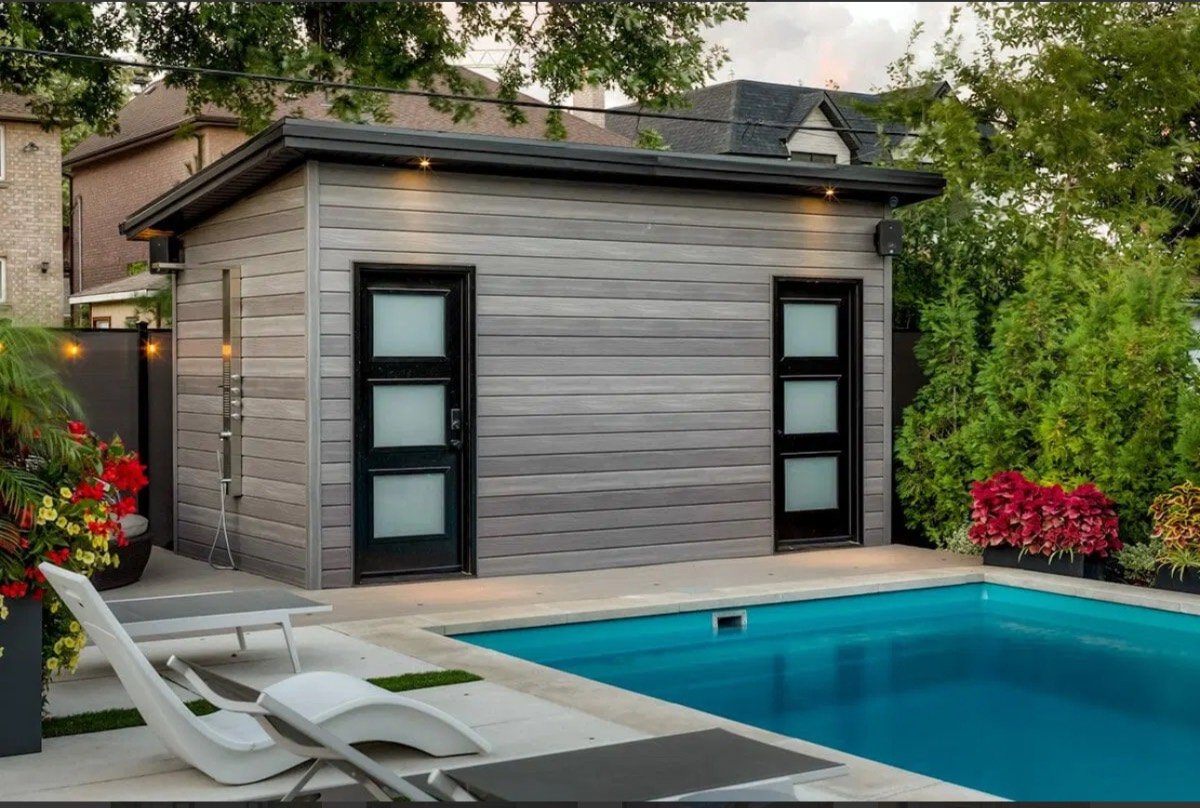
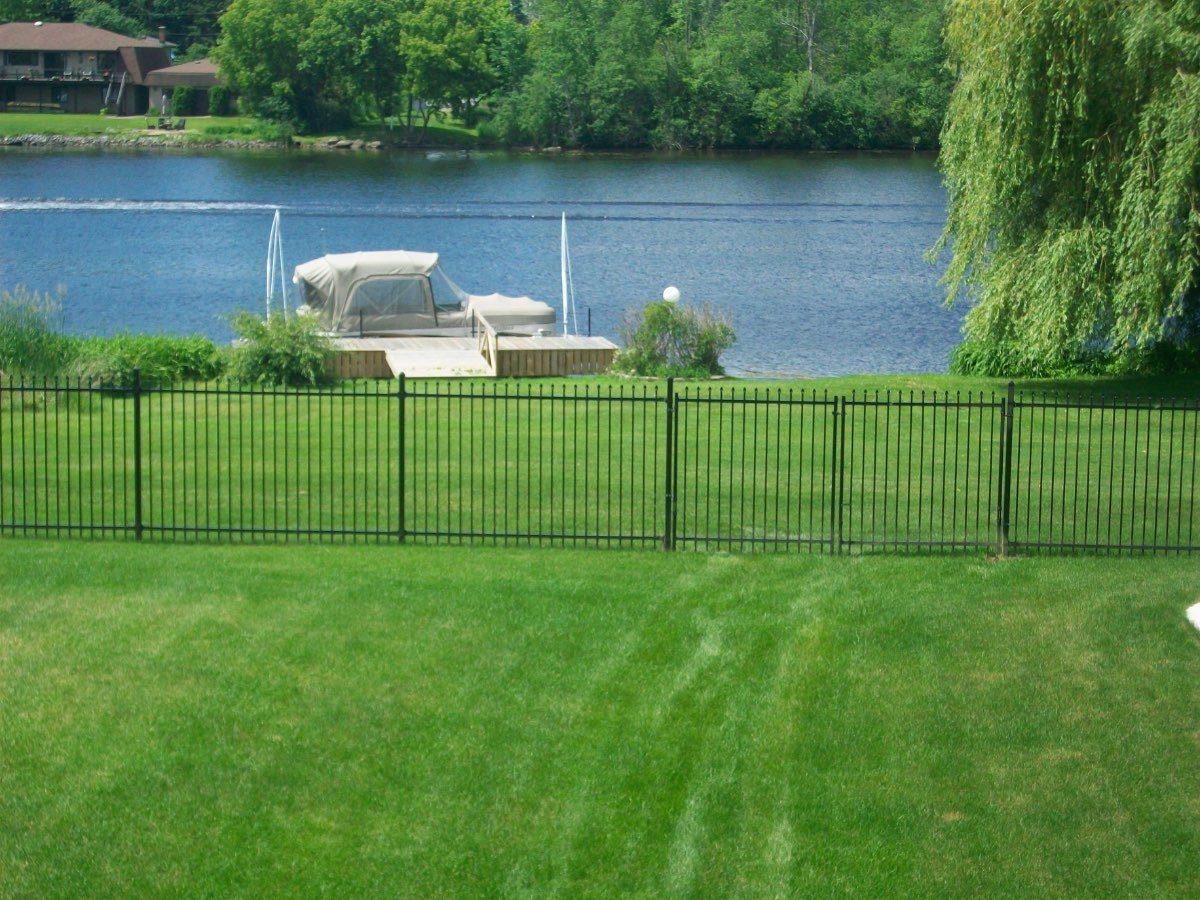
About the photos on this page
Our project gallery is organised by the type of work rather than by neighbourhood or by the by-law detail it was built to, so we do not claim that a particular photo on this page shows a pool enclosure we built at a named address, or one inspected against the numbers above. Rather than attach a description to a project we cannot verify, we are not doing that. You can see the full gallery of the work we build, filed by project type.