

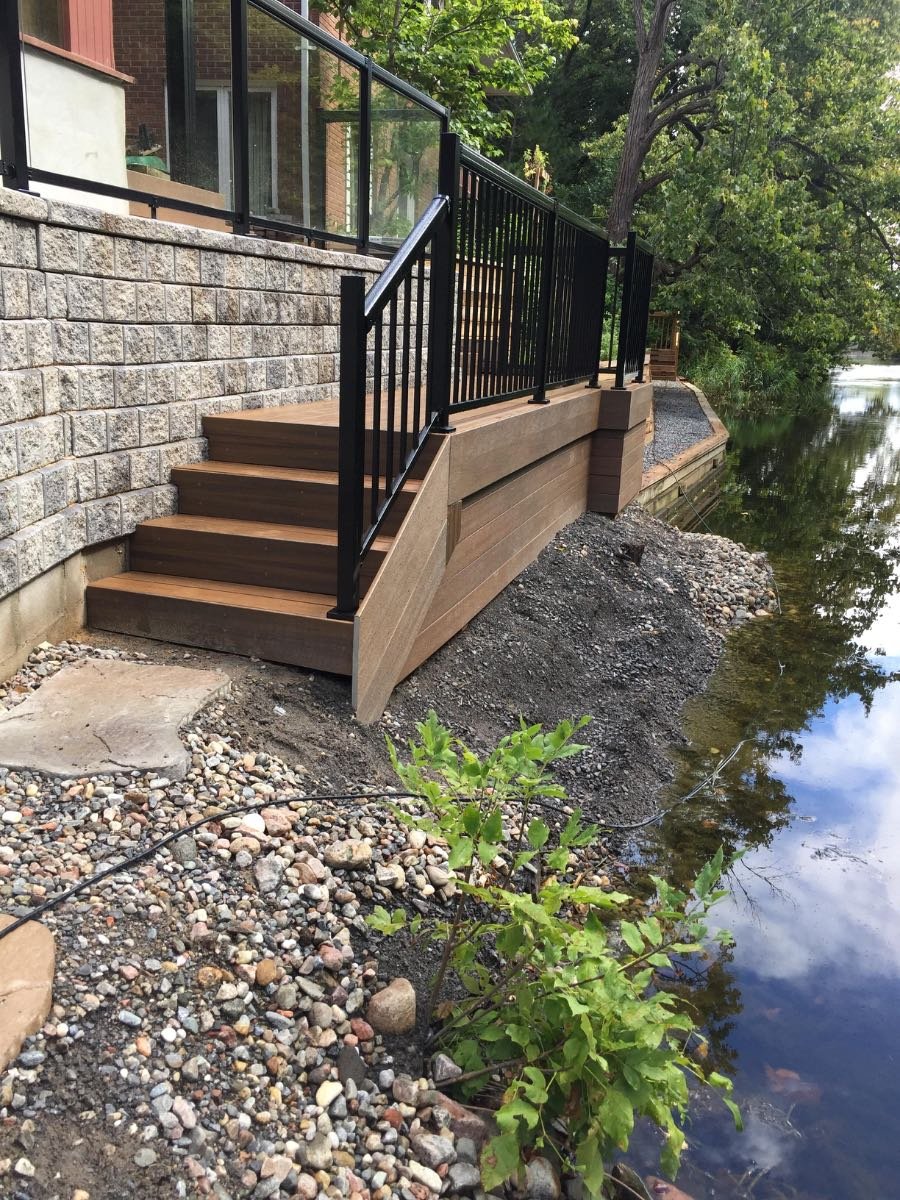
Interlock stone steps and a retaining wall beside a water feature
← Interlock

Interlock in Orleans: patios, walkways, steps and retaining walls.

New stone and repairs to stone you already have, in Techo-Bloc and Permacon, with the base checked before anyone quotes the job.

Interlock in Orleans is the stone half of a service we already run across east Ottawa. Our east-end page covers decks in Orleans, Gloucester, Findlay Creek and Vanier; this one covers patios, walkways, steps, retaining walls and driveways in Techo-Bloc and Permacon stone. Most of the Orleans yards we get asked about want both, because a deck that steps down onto a stone patio is one project rather than two trades booked separately and hoping the schedules line up. Interlock suits an Ottawa winter for a specific reason. It is many pavers on a deep compacted base rather than one rigid slab, so when the ground heaves the joints flex and the pavers move together instead of cracking.

Where in Orleans do we build?

Orleans is already part of our regular east-end service area, and has been since before this page existed. We take interlock work across Avalon, Fallingbrook, Chapel Hill, Convent Glen, Queenswood Heights and Cardinal Creek.

Same rule as everywhere else on this site: our gallery is organised by the type of work rather than by neighbourhood, so we will not point at a photo and tell you it was built off St Joseph Boulevard. When we start tagging projects by neighbourhood, verified Orleans photos will replace this paragraph. Until then, the full gallery is what we can honestly show you.

How we handle an existing surface

  1. A free consultation, and if there is already stone in the yard we look at it before we talk about replacing it.
  2. We check the base under the existing surface, not just the surface. A patio that has dipped in one corner and a patio that has failed across its whole base are different jobs at very different prices, and you should be told which one you have.
  3. We tell you plainly whether it is a lift and relay, a partial rebuild, or a full rebuild. Where the same stone can go back down, it goes back down.
  4. Anything new gets drawn in 3D and AutoCAD first, so you approve the layout, the pattern and the price together.
  5. We build, and the base goes in as compacted lifts with the joints locked in polymeric sand.

We book your date once the scope is settled, and if weather or a permit moves it, you hear it from us the day we know rather than the week after.

Does interlock need a City of Ottawa permit?

For patios, walkways and ground-level stone, the City’s deck permit page says nothing at all, so we do not tell you “interlock never needs a permit”. We confirm the current requirement for your property and your project.

Where a raised element is part of the job, the published deck thresholds are the ones that apply: a permit is required if the deck is adjacent to or attached to the house and its walking surface is more than 600 mm (24 in.) above the adjacent grade; if it is an elevated deck providing principal access to a building; or if it is independent from the house, has a walking surface greater than 10 square metres (about 108 square feet), and sits more than 600 mm (24 in.) above grade.
Source: City of Ottawa: Decks, do I need a building permit?

Good to know

Orleans interlock questions, answered.

We do interlock repair as well as new installation, across Ottawa including Orleans, Gloucester, Findlay Creek and Vanier. Repair is genuinely a different job from installation and it is worth asking a contractor whether they actually do it, because lifting and relaying an existing patio without leaving a visible patch takes more care than laying a fresh one. Where the existing stone is sound, we lift it, correct the base underneath, and relay the same pavers so the repair does not read as a patch. Where the stone itself has failed or the pattern is no longer made, we tell you that before you are committed to anything.

It depends almost entirely on what is under the surface, which is why we look before we quote. A patio where one section has settled over a soft spot is a contained job: lift that area, correct the base, relay the same stone. A surface where the base was never built properly is a different job wearing the same clothes, and quoting it as the first one is how a price ends up moving after you have signed. We do not publish a repair price list. We come out, look at the base, and give you one price against a scope you have seen and understood.

Properly, it means going back to the base. The pavers come up and are set aside, the failed base is excavated and rebuilt in compacted lifts, the bedding sand is screeded level, the stone goes back down, and the joints are locked with polymeric sand. The part people skip is the excavation, because it is the invisible, unglamorous half of the job, and skipping it is exactly why a surface that was "redone" three years ago is dipping again. If the original stone is sound, redoing an interlock surface usually does not mean buying new stone. It means rebuilding what sits underneath it.

We are not going to give you a number of years, because the honest answer is that it depends on the base, the drainage, the load the surface carries and how much winter salt reaches it, and a single figure would hide all four. The more useful way to think about it: concrete and asphalt age by cracking, and once a crack opens it tends to keep moving until the surface is broken out and replaced. Interlock ages by settling, and settling is correctable. That is a very different story across the life of a surface, and it is the main reason we build in stone.

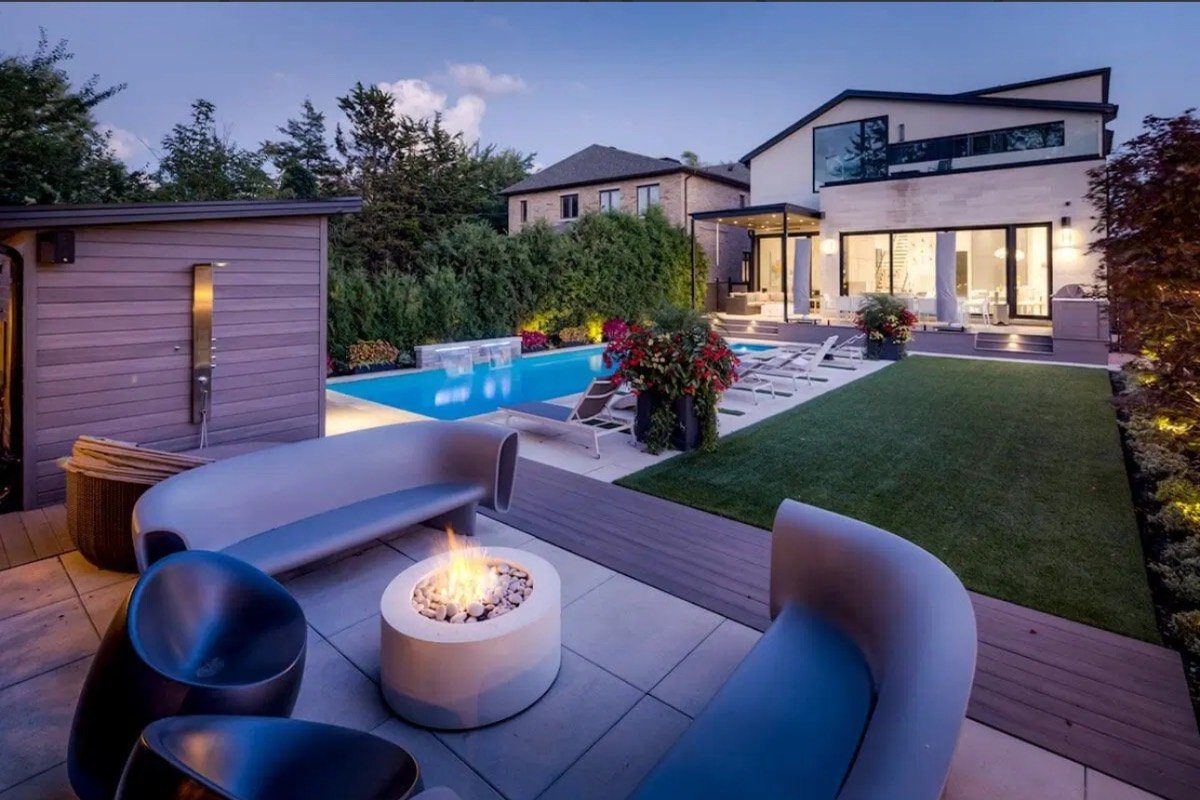
Interlock backyard patio with a firepit at dusk

Orleans · Gloucester · Findlay Creek · Vanier

Settled patio, or a new one?

Book a free consultation and we will check the base before anyone talks about replacing the stone.

CallBook a free consult