
All three change how it gets built and what the City wants to see first. Two facts decide most Ottawa driveway projects and almost nobody publishes them: the permit you need is an access permit, not a building permit, and the City quotes six to eight weeks to process it. Everything below follows from those two.
Ottawa Decking Solutions is an insured, family-owned Ottawa contractor, established 2016, and every project is modelled in 3D and AutoCAD before we dig. We build driveways as part of interlock patios, walkways, driveways and retaining walls across Ottawa.
The permit is an access permit, and the by-law behind it is four months old
This is the section every competitor page measured on 2026-08-24 leaves out, and it is the part that actually delays projects.
A driveway crosses the boundary between your property and the City’s right of way. The City regulates that crossing. On 2026-04-08 it enacted the Access By-law (No. 2026-139), which replaced the Private Approach By-law (No. 2003-447). The vocabulary changed with it: what used to be a private approach is now a vehicular access.
An access permit is required to construct, modify (including widening), close or remove an access. It is not required to resurface one. So lifting a tired paver driveway and relaying it on the same footprint is a different administrative job from making it wider by a metre, even though the two look identical from the street.
Three details worth knowing before you plan around a date:
- Approximate processing time is six to eight weeks, and the City says that figure includes your contractor obtaining a road cut permit for the work in the right of way. It can stretch with seasonal demand, which in Ottawa means spring.
- The 2026 standard application fee is $208, non-refundable, and due when you apply. A culvert approval, if your access crosses a ditch, is $121 on top.
- The permit is valid for one year and the access has to be built before it expires.
And the answer to the question people actually ask: no, you do not need a building permit to construct your driveway. The City states this directly. But it still has to approve the design through an access permit, and a road cut permit is separately required for all road activity work in the right of way.
There is one live restriction that will not be in any guide written before this summer. Permissions in the new Zoning By-law (No. 2026-50) relating to creating new front yard parking spaces are not in effect until the Ontario Land Tribunal declares them in effect, which the City anticipates by the end of September 2026. Until then, permit applications to install or widen an access to a front yard parking space cannot be processed. If that is your project, the calendar, not the contractor, is the constraint.
Source, and worth reading before you commit to anything: City of Ottawa, Access permits for driveways and walkways.
How wide the City will let your driveway be
Width is where most widening plans quietly die, and it is set by Section 606 of the Zoning By-law (No. 2026-50), not by the Access By-law.
The general shape of it, from the City’s own summary:
- In the downtown core and urban areas, the maximum driveway width is 6 metres.
- On lots less than 6 metres wide, an individual driveway is not permitted at all. The driveway has to be shared with the abutting lot.
- In all other areas, the driveway may be up to 50 per cent of the lot width.
- The access sitting in the right of way cannot be wider than the approved driveway on private property, and cannot exceed 9 metres or 50 per cent of the lot width, whichever is less.
There is a useful exception for anyone who wants a proper walkway beside the cars. A walkway up to 1.8 metres wide can go in next to a driveway without an access permit, provided it meets the limited driveway extension criteria and the total width of all accesses stays under 50 per cent of the frontage. If your frontage is already at 50 per cent, any further hard landscaping has to stay on private property. That is the point at which a driveway stops being a driveway question and becomes a whole-frontage one, which is what our landscaping and design work is for.
The surface itself is regulated too. Subsection 601(5) requires driveways in the urban and suburban transects to be finished with asphalt, cement, permeable pavement, honeycomb block, turf block, cobblestones or similar stable dust-preventative material. Interlock pavers sit comfortably inside that list, which is why this is a permitted surface question rather than an argument.
The Development Information Officer line for property-specific questions is 613-580-2424, extension 23434.
Grade: the two numbers that decide whether water runs off or into your garage
The City’s Access Design Requirements, first edition dated 2026-04-08, sets a grade window for the access. It shall not be less than 2 per cent, not exceed 8 per cent, and must descend in the direction of the roadway.
That lower bound is the one homeowners never expect. A driveway that is too flat is a non-compliant driveway, because meltwater has nowhere to go. In a city where a February thaw can put an inch of water on every hard surface in a neighbourhood inside an afternoon, 2 per cent is a sensible floor rather than a bureaucratic one.
Two more from the same document, both easy to trip over on an older street: no municipal tree may be removed, and no work done inside its critical root zone, without prior City approval. And an access serving one to three parking spaces has to sit at least 0.3 metres back from the adjoining property line, measured at the highway line, so that drainage between lots still works.
A driveway base is not a patio base, and the difference is measured in inches
Everything above is paperwork. This is the part that decides whether the driveway is still flat in year twelve.
A patio carries people. A driveway carries a vehicle, repeatedly, over the same two tracks. The manufacturers we build in publish different numbers for the two, and the gap is not small.
| Interlock application | Compacted stone base | Setting bed |
|---|---|---|
| Interlock patios and walkways | 6 to 8 inches | at least 1 inch |
| Driveway | 12 inches | at least 1 inch |
| Retaining walls and steps | minimum 6 inches | not applicable |
Those are Techo-Bloc’s figures. Worth flagging honestly: Techo-Bloc’s own FAQ gives two different driveway numbers in two different answers. One says “for residential driveways, be sure that you use a minimum 8 inch compacted base material”. Another says the company “recommends a minimum of 6 inch to 8 inch stone base for patios and 12 inch for driveways, while the setting bed should be at least 1 inch thick”. We build to the stricter of the two. On a driveway, the cost of being wrong is a rutted surface and a rebuild, and the extra four inches of granular is the cheapest insurance on the whole project.
Techo-Bloc also strongly recommends a geotextile filter fabric under pavers to stop the base migrating into the subgrade, and names clay soils specifically. Plenty of Ottawa sits on exactly that. The fabric is invisible, it adds very little to the price, and leaving it out is one of the quietest ways to build a driveway that fails from underneath.
Source: Techo-Bloc FAQ
The catalogue trap: slabs are not driveway stone
This one costs people real money, and it happens at the showroom rather than on site.
Techo-Bloc’s guidance is blunt: if a product sits in the paver section it can go on a driveway. If it sits in the slab section it cannot, because it was never designed for vehicular traffic. The Borealis landscaping slab is called out by name as pedestrian-only.
Large-format slabs are exactly what people fall in love with on a patio. They are the current look. Put them under a car and you are outside the product’s design case and outside the warranty, and the failure mode is cracking rather than settling. If you have chosen a stone for the back yard and want the driveway to match, that is a conversation to have before anyone orders, because the answer is sometimes a different unit in a matching colour rather than the same unit.
Road salt, and why a driveway sees more of it than your patio ever will
Your patio gets whatever you throw on it. Your driveway gets that, plus everything your tyres carry home.
The City of Ottawa applies dry salt, wet salt, liquid brine and abrasive grit to streets, and describes its own method plainly: rock salt is sprayed with a liquid de-icer as it is spread, which makes it sticky so it adheres to the road. Sticky is the operative word. A material engineered to cling to asphalt clings just as well to a tyre, and it comes off in the first ten metres of your driveway.
This is where the paver brands do something asphalt cannot match, and it is worth reading the actual terms rather than the marketing.
Techo-Bloc, residential use: the conformity of its products is guaranteed for life from manufacture and from delivery to site. The warranty covers structural integrity and abnormal surface deterioration caused by de-icing salts (sodium chloride), and it excludes Wet Cast collection products unless otherwise stated. Two limits matter. Techo-Bloc replaces the affected units only, after a site inspection, and its responsibility is limited to the cost of the product, not the cost of installing or replacing it. Replacement pieces from a later batch may differ in colour or texture, and that variation is not a defect under the warranty.
Permacon, residential landscaping and masonry: a 50-year warranty, which the company states meets CSA and ASTM requirements. Efflorescence is not covered, and Permacon describes it as a natural phenomenon that usually disappears on its own. Claims have to be reported no later than 15 days after a product is found to be defective.
Read those together and the honest conclusion is the one the brochures skip: the manufacturer covers the stone. Nobody but your contractor covers the build. That is precisely what our own written workmanship warranty exists for, and its terms are set out in your signed project agreement.
Sources: Techo-Bloc warranties · Permacon warranty
Interlock, asphalt or poured concrete for an Ottawa driveway
Four of the nine People Also Ask questions on this search are some version of this comparison, so here it is on the axes that matter for a driveway specifically. We cover the surfaces in general in our interlock versus poured concrete and asphalt guide; this table is about what changes when the surface has a car on it.
| What differs | Interlock pavers | Poured concrete | Asphalt |
|---|---|---|---|
| Up-front cost band | Highest of the three | Middle | Lowest |
| Behaviour in freeze-thaw | Many units on a flexing base, joints absorb ground movement | One rigid slab, absorbs movement by cracking | Flexes somewhat, then ruts and potholes |
| How a failure is repaired | Lift the affected stones, correct the base, reset the same stone | Patch shows, or break out and re-pour | Patch, or resurface |
| Can a repair be invisible | Yes, if the original stone goes back down | No | Rarely |
| Salt damage named in a product warranty | Yes, sodium chloride named by both Techo-Bloc and Permacon | No equivalent | No equivalent |
| Routine maintenance | Sweep, rinse, top up joint sand as it wears | Crack sealing | Sealcoating, repeated |
| Where it wins | Long horizons, salt, and anyone who wants a repair not to show | Flat sites, budget mid-range | Lowest first cost |
We do not publish a price per square foot for driveways, and we would rather say so than post a number that moves the moment somebody’s real site conditions are measured. Excavation depth, what is under the sod, whether a culvert is involved, the permit path and the width the Zoning By-law allows all move the figure enough that a published range would mislead more people than it helps. The price comes with the 3D design, attached to your actual driveway.
The hardscaping contractor licence, and how to check yours in about a minute
This is new, it is Ottawa-specific, and it is the single most useful thing a homeowner reading this page can act on today.
Since 2026-03-01, any contractor performing hardscaping work in the City of Ottawa is required to hold a City hardscaping contractor licence. The City’s access permit page states it directly: any business that installs, alters or paves hard landscaping features, including a vehicular or pedestrian access, must be licensed with the City of Ottawa as a hardscaping contractor and must follow all City by-laws. Driveways, walkways, patios, retaining walls and steps in asphalt, concrete, interlock, pavers, flagstone or brick are all inside the definition.
To qualify, a contractor has to carry commercial general liability insurance of not less than $2,000,000 per occurrence and automobile liability of not less than $2,000,000. The 2026 licence fee is $319, it is non-transferable, and it expires annually on October 31. Those two insurance figures are the City’s threshold for issuing the licence. They are not a statement about what any particular company carries, ours included, which is why the answer is to ask for the certificate rather than to read a number off a web page.
The genuinely useful part: the City publishes the list of licensed hardscaping contractors, and anybody can read it. Before you sign with anyone for a driveway, look them up: Hardscape, list of licensed contractors. Ask for the insurance certificates too. A contractor who cannot produce either is telling you something.
When interlock driveways actually get built in Ottawa
The season is not set by the digging. It is set by the joints and the permit.
Polymeric sand, the material that locks the joints and keeps the surface working as one, is water-activated. Manufacturer guidance is emphatic that it must not be applied to wet or even slightly damp pavers, because the instant it touches moisture it starts to cure, and removing it is not easy. It also wants a clear forecast: heavy rain arriving a few hours after the final wetting has been observed to wash the joints out. And for a driveway specifically, the guidance is to avoid vehicular traffic for at least 48 hours while the system cures, against 24 hours for foot traffic.
So the closing constraint on an Ottawa driveway is a run of dry, above-freezing days, plus two days of not parking on it. Late autumn takes that away well before the ground itself freezes.
Source: Hanover Architectural Products, Polymeric Sand Installation Guidelines (PDF)
Working backwards from that, and adding the City’s six to eight weeks for the access permit, the planning arithmetic is simple. A driveway you want finished in the good weather is a driveway whose permit application is already in. Booking a design consultation in winter is not eagerness. It is the only way the permit and the workable season line up.
How much does an interlock driveway cost in Ottawa?
We do not publish a square-foot price, and this page will not invent one. The honest answer is that a driveway quote is decided by excavation depth, the condition of what is underneath, the width the Zoning By-law permits on your lot, whether a culvert or a municipal tree is involved, and whether the job needs an access permit at all or is a resurface. Those are measured on site, not estimated from a photo. You get one project-specific price attached to a 3D design you have already approved. Financing is available through our third-party partner iFinance, which is an option rather than an offer of credit.
Is an interlock driveway cheaper than concrete?
No. Interlock is the higher up-front investment of the two, and anyone telling you otherwise is comparing different jobs. What changes the arithmetic is the repair story. A cracked slab cannot be un-cracked, so the concrete repair is a patch that shows or a break-out and re-pour. A settled paver is lifted, the base underneath is corrected, and the same stone goes back down. Over a long Ottawa timeline with salt on it every winter, that difference is worth more than the opening price gap to some people and not to others. We would rather you decide that with both numbers in front of you.
How long does an interlock driveway last?
Longer than the surface, if the base was built right, because the base is the thing that ages. A correctly excavated and compacted 12 inch base with a geotextile beneath it and drainage designed in is what keeps a driveway flat through freeze-thaw. The pavers themselves carry manufacturer warranties of 50 years from Permacon and a lifetime residential conformity guarantee from Techo-Bloc, both of which name de-icing salt damage. And because the surface is modular, a driveway does not reach a point where the only option is to tear it out. A settled section is lifted, corrected and reset rather than replaced.
What are the disadvantages of a paver driveway?
Three real ones. It costs the most up front of the three common surfaces. It takes longer to build than laying asphalt, because the base is deeper and the permit and the joint cure both add time. And it is unforgiving of a bad installer in a way asphalt is not, because every mistake in the base shows up as an uneven surface within a few winters. The fourth thing people list, weeds, is mostly an installation question rather than a material one. See below.
Do weeds grow through pavers?
Not through them. Weeds in an interlock driveway grow in the joints, from seed that lands on top and settles into the sand, which is why the answer is joint material rather than herbicide. Polymeric or stabilizing sand hardens in the joint and leaves very little for a seed to take hold in. It wears down over years and wants topping up, and that top-up is most of the routine maintenance an interlock driveway asks for.
Will water drain through pavers?
Through a standard interlock driveway, no. Water runs across it and off it, which is why the grade matters and why the City sets a 2 per cent minimum on the access. If you specifically want water to go down rather than across, that is a different product: permeable pavement is named in subsection 601(5) as a permitted driveway surface, and Techo-Bloc makes a permeable line. It is worth raising at the design stage rather than after, because it changes the base build.
Do I need a permit for an interlock driveway in Ottawa?
You need an access permit if you are constructing, modifying, widening, closing or removing the access. You do not need one to resurface an existing access on the same footprint, and you do not need a building permit for a driveway at all. Your contractor needs a road cut permit for the work in the right of way. If your driveway is part of a new build, the access is usually reviewed through the building permit and grading plans instead, and no separate access permit is required. We prepare the drawings and handle the application as part of the build, using the same 3D and AutoCAD model you approve.
About the photos on this page
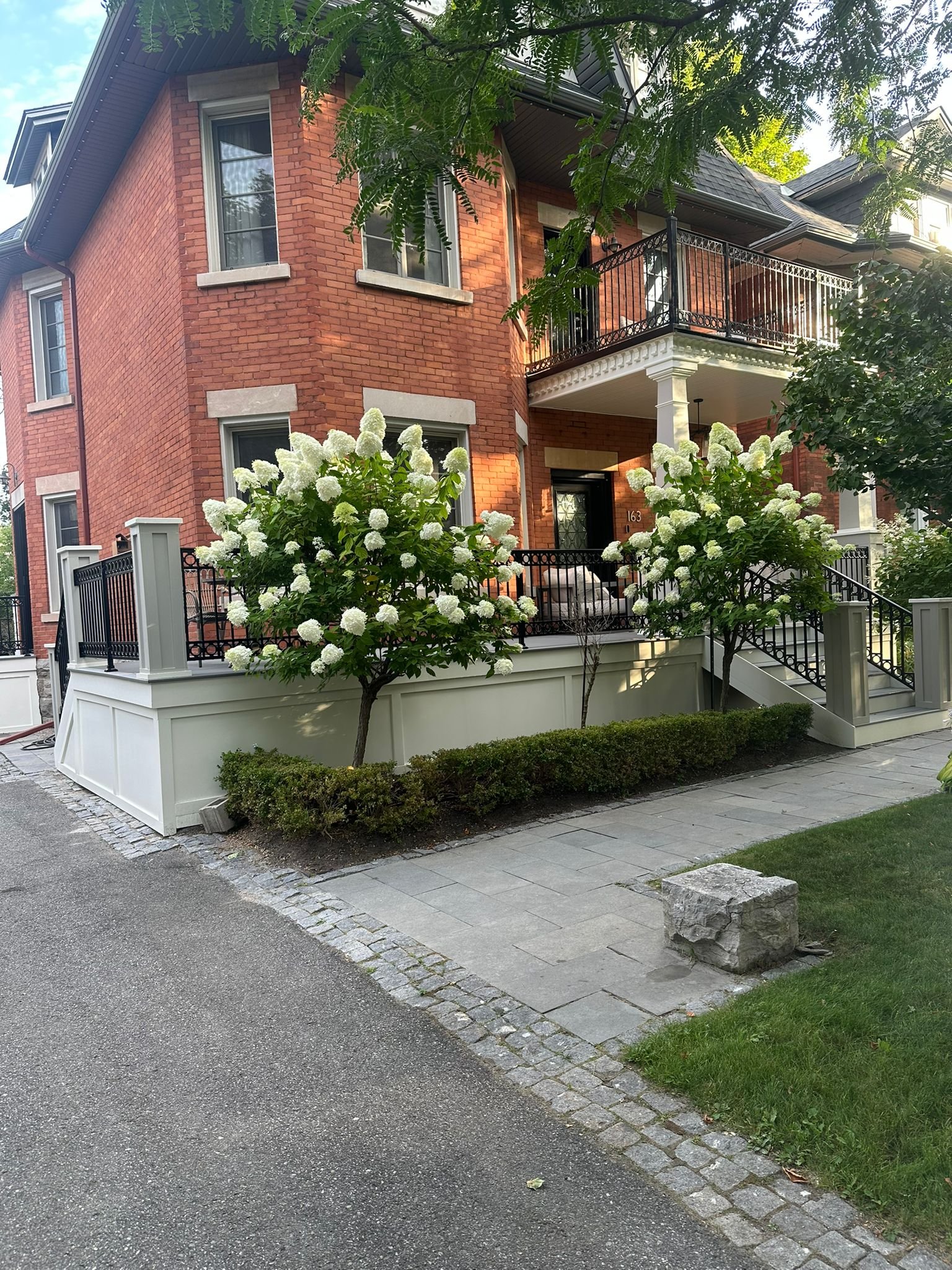
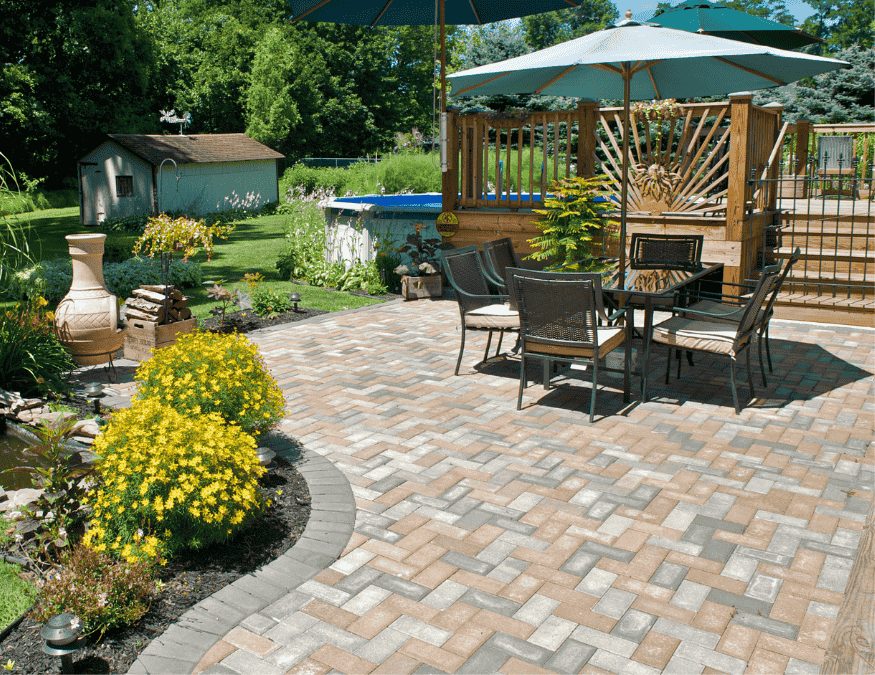
We want to be straight about this. Our project gallery is organised by type of work rather than by address, and we cannot point at a photo here and confirm which Ottawa driveway it is or which brand of stone is in it. Rather than attach a claim we cannot stand behind, we are not doing that. What you can see is our full gallery of the work we build. As projects get tagged properly, verified driveway photographs will replace this note.