
The City of Ottawa caps a residential fence at 213 cm in a rear or side yard and 1 m in a front yard. An ordinary vinyl fence needs no building permit. A vinyl pool enclosure does.
What vinyl fencing actually is, and the one spec worth asking about
A vinyl fence is not one plastic. It is extruded rigid PVC profile, either a single homogeneous extrusion or a coextrusion of two or more PVC compounds in distinct layers, with the harder, more weather-resistant compound on the outside. Posts, rails, pickets and gates are all made from that profile. The hinges, latches, screws and post caps bolted to it may be PVC or may not be.
There is a published North American standard for it: ASTM F964-13(2024), Standard Specification for Rigid Poly (Vinyl Chloride) (PVC) Exterior Profiles Used for Fencing and Railing. It sets requirements for dimensional tolerance, extrusion quality and weatherability, and it specifies test methods for impact resistance, warp, dimensional stability, and impact on a weathered specimen. That last one matters here. A PVC profile that passes an impact test fresh out of the box and fails after accelerated weathering is exactly the fence that cracks in its fourth February, and the standard exists to separate the two.
Now the part almost nobody mentions. ASTM F964 states in its own scope, twice, that load-bearing characteristics for fence assemblies are not addressed, naming wind load specifically. So a fence can be built entirely from compliant profile and still be the wrong fence for a wide-open Ottawa lot, because compliance says nothing about whether the posts and the spacing hold a solid panel up in a February gale or under drifted snow.
That is the installation half, and it has its own standard: ASTM F1999-14(2024), Standard Practice for Installation of Rigid Poly(Vinyl Chloride) (PVC) Fence Systems. Post depth, post spacing, how the panels are set. When we quote a vinyl run we are quoting that half, not the box the panels came in.
How vinyl behaves through an Ottawa winter
Three things happen to a fence here that do not happen in a milder city, and vinyl answers them differently from wood.
Freeze-thaw moves the ground, not the panel. Ottawa runs through dozens of freeze-thaw cycles a year. Water in the soil freezes, expands, and lifts posts. Depth below the frost line does not on its own stop it, because frozen clay grips the sides of a post. Vinyl does not rot when this happens, but a vinyl fence on shallow posts still comes out of true by spring, and unlike a cedar fence you cannot quietly plane a lifted panel back into line. It is a system of interlocking parts that either fit or do not. We set posts below the frost line for this reason, and on a vinyl run it is less forgiving than on any other material we build.
Road salt is where vinyl wins outright. The spray that comes off a plow or off your own driveway does not stain, corrode or degrade PVC. On a wood fence that same spray drives a re-staining cycle. On steel it starts a rust conversation. Vinyl beside a driveway is the closest thing to a settled argument in this trade.
Cold makes rigid PVC less forgiving. PVC is more brittle at winter temperatures than at summer ones, which is part of why the impact-on-weathered-specimen test in ASTM F964 exists at all. In practice a vinyl fence takes a snowblower discharge or a hockey puck better in July than in January, so a run that is going to get hit should be specified with that in mind rather than assumed.
There is a fourth, quieter one. PVC expands and contracts with temperature, and an Ottawa year covers an enormous range. Vinyl rails are meant to be installed with room to move inside the post. Pinned tight, they bow. That is a fitting decision made on the day, not a product decision made in a catalogue.
Vinyl against the other fences we build
We build wood, composite, vinyl and aluminium. We do not have a house favourite. The honest comparison is on properties rather than on price, because the price of a run changes with length, grade, gates and access.
| Material | Relative up-front cost | Maintenance it asks for | What decides how long the line lasts | Where it wins | Where it loses |
|---|---|---|---|---|---|
| Vinyl (PVC) | Mid | Wash it. No stain, no seal, no sanding. | The posts and the ground, not the plastic | Salt spray, driveway edges, colour that stays even along the whole run, an owner who wants zero upkeep | Narrow colour choice, damage means swapping a component rather than a board, it cannot be refinished |
| Custom wood, cedar or pressure-treated | Lowest to low | Cleaning and re-staining on a cycle, or let it silver | Rot resistance at the ground line, and whether anyone refinishes it | Warmth and grain, awkward angles cut on site, the cheapest way into a solid built fence | It is a maintenance schedule, and skipping it shows |
| Composite | Higher | An occasional wash | The core material and the cap | A run that stays one consistent colour instead of patching as it ages, a wood look with no stain | Costs more at the start than wood or vinyl |
| Iron and aluminium, pool code | Varies with height and gate count | Very little. The powder coat does the work | The coating and the fasteners | Pool enclosures, slim pickets that keep the sightline to the water open, security | It is not a privacy fence and is not meant to be |
No dollar figures appear in that table on purpose. Ottawa Decking Solutions has not published a per-foot fence price, so this page does not invent one. The relative column is the ordering of the materials, not a quote.
Privacy is a configuration rather than a fifth material. Solid panels, lattice tops and matching gates can be built in wood, composite or vinyl, and we lay them out around your real property line and grade rather than a stock panel count.
The four materials, plus privacy runs and gates, sit together on our page for fencing in Ottawa, with the Fence By-law heights and the pool-enclosure permit that apply whichever one you choose.
- Compare against wood: custom wood fences
- Compare against composite: composite fences
- Around a pool: iron and aluminium pool fences
- Full height and gates: privacy fences and gates
- All five together, and how we plan a run: fence builder in Ottawa
How tall can a vinyl fence be in Ottawa?
This is settled by City of Ottawa Fence By-law No. 2003-462, and the figures are specific.
- Front yard: 1 m.
- Any yard other than a front yard: 213 cm.
- Gates may exceed those limits by up to 30 cm. Archways forming part of an entrance may reach 250 cm.
- Decorative caps on structural posts may exceed the limit by up to 15 cm. Worth knowing, because almost every vinyl system ships with a decorative post cap, and the cap is not what puts a correctly built vinyl fence over the line.
- Corner lots and driveways have a 75 cm ceiling inside a visibility triangle. At a street intersection the triangle is formed by measuring 3 m along each lot line. At your own driveway it is formed by measuring 2 m along the lot line and the driveway. Nothing taller than 75 cm goes inside it.
One rule catches people out on a sloped yard. Height is measured from the grade at the base of the fence, and where the two sides of the fence sit at different grades, it is measured from the higher one. A fence that reads as 213 cm from inside your yard can be over the limit measured from the neighbour’s side. That is a decision made before anything is dug, which is why we model the run in 3D and AutoCAD first.
Source: City of Ottawa Fence By-law No. 2003-462, sections 3 to 7, read 2026-08-24.
Do you need a permit for a vinyl fence in Ottawa?
For an ordinary residential fence, no. Fence By-law No. 2003-462 sets height limits, construction and maintenance requirements, and offences, and it establishes no fence permit and no application process. What it does require is that the fence be stable, vertical, made of good-quality materials suitable for the purpose, and supported in a manner matching the design of the whole fence, then kept in good repair and structurally sound.
Designated heritage buildings and properties inside a Heritage District Overlay are not covered by the City’s building permit exemptions, and the City asks owners to confirm with a Building Client Service Centre before starting.
A pool is a different by-law and the answer flips.
Can a vinyl fence be a pool enclosure in Ottawa?
Yes. Ottawa’s Pool Enclosure By-law No. 2013-39 has a section written specifically for wrought iron, aluminum or vinyl construction, so vinyl is an accepted enclosure material rather than a workaround. What applies to it:
- A permit is required for every pool enclosure, including a replacement enclosure. The published fee is $257.00.
- Minimum enclosure height 1.5 m.
- No opening through or under any part of the enclosure may pass a 100 mm sphere, and on vinyl or metal construction, no opening between vertical members may pass one either.
- Support posts spaced no more than 3 m apart.
- Top and bottom rails spaced so there is at least 1.2 m of clear space between them, so a child cannot use the rails as a ladder.
- No attachment that could help someone climb may be fixed or placed on the exterior face of the enclosure between 140 mm and 900 mm from the bottom of it. In practice that rules out leaning the woodpile, the planter or the storage bin against your pool fence.
- A self-closing gate, with a self-latching device at least 1.35 m above the bottom of the enclosure.
- The enclosure must sit at least 1 m from the nearest inside wetted surface of the pool wall.
Those numbers decide the design. A 213 cm privacy fence already clears the 1.5 m minimum, but the 1.2 m clear-space rule between rails is the one that quietly rules out some panel styles, and it is far easier to check on a drawing than on a finished fence. We prepare the permit drawings as part of the build.
Source: City of Ottawa Pool Enclosure By-law No. 2013-39, sections 14, 20, 21 and 30, and Schedule A, read 2026-08-24.
What are the downsides of vinyl fencing?
Four, and they are real.
It fades, and the manufacturers say so. Catalyst Fence Solutions, which publishes a transferable limited lifetime warranty on its vinyl fence, states in that same certificate that after prolonged outdoor exposure all products experience some gradual fading, and that this is considered normal. Anyone telling you a vinyl fence holds its exact colour forever is selling past the paperwork. Read it yourself: Catalyst Fence Solutions, Vinyl, Molded & Composite Fence Certificate of Warranty (PDF), read 2026-08-24. We install no Catalyst product we can point at, and cite it here only as a manufacturer stating on the record what this material does.
You cannot refinish it. A cedar fence that has gone grey can be brought back with a weekend and a can of stain. A vinyl fence that has faded has faded. That trade is the whole point of the material, and it only reads as a downside if you were expecting both halves.
Repairs are component swaps. Damage a wood picket and you replace a picket. Damage a vinyl panel and you replace a manufactured component that has to match. So the brand and profile installed today is a decision about your repairs in ten years, not just about this season.
Cold makes it less forgiving. Covered above. Rigid PVC takes an impact better in summer than in a January cold snap.
What is the lifespan of a vinyl fence?
The plastic is rarely what ends a vinyl fence. Manufacturers publish lifetime-class limited warranties on the material, and ASTM F964 tests impact after weathering precisely so that claim means something. What ends a vinyl fence line in Ottawa is almost always the ground: posts set too shallow for the frost, or a run where the wind and snow load were never thought about, because the material standard explicitly does not cover load.
So the honest answer is that lifespan here is an installation question wearing a material costume. We publish no year figure, because the only number that would matter is the one for your soil, your exposure and your post depth.
Trex or vinyl for a fence?
Different materials solving different problems. Composite is wood fibre and plastic under a tough outer shell, so it reads as wood, holds a consistent colour along the run, and costs more up front. Vinyl is all plastic with no wood content, so it is the lighter, more moisture-proof option and the easier one to rinse clean, with a narrower palette and a more manufactured look up close.
If you want a fence that looks like timber and never gets stained, that is composite. If you want the lowest-upkeep fence on the list and a clean, uniform line suits you, that is vinyl. We build both, and the site visit is where that gets decided against your yard instead of against a brochure. See composite fences for the other side of it.
When to install a vinyl fence in Ottawa
Posts have to go below the frost line, and that fixes the season more than anything else does. In deep winter the ground is frozen hard enough that digging and setting posts correctly is difficult or impossible. In early spring the top layer can turn to mud before it firms back up. The workable window runs from once the ground has firmed in spring through to before it locks in late autumn, and the middle of that window is when the calendar fills.
Vinyl adds one wrinkle to the timing. PVC is easier to cut, handle and fit in mild weather than in cold, and rails need room to move inside the post, so a run fitted in a heat wave and a run fitted near freezing are set differently on purpose. Booking ahead is the practical answer, and we will tell you honestly if your run is better held for a few weeks than forced into bad ground.
Related reading: our Ottawa deck and fence permit guide and the best time to build in Ottawa.
What does a vinyl fence cost in Ottawa?
The cost of a vinyl run here is driven by length, height, the number and width of gates, how much grade the run crosses, whether an old fence has to come out, and how the crew and the material reach the back yard on a tight lot. A straight flat 30 m run with one gate and rear laneway access, and a stepped run across a sloped corner lot with two gates and side-yard-only approach, are not the same job at the same per-foot rate.
Ottawa Decking Solutions has not published a vinyl fence price band, so this page quotes none. We give you a fixed number after the site visit, against a 3D and AutoCAD drawing you approve first, and financing is available through our third-party partner iFinance if you want to spread a longer run.
About the photos on this page
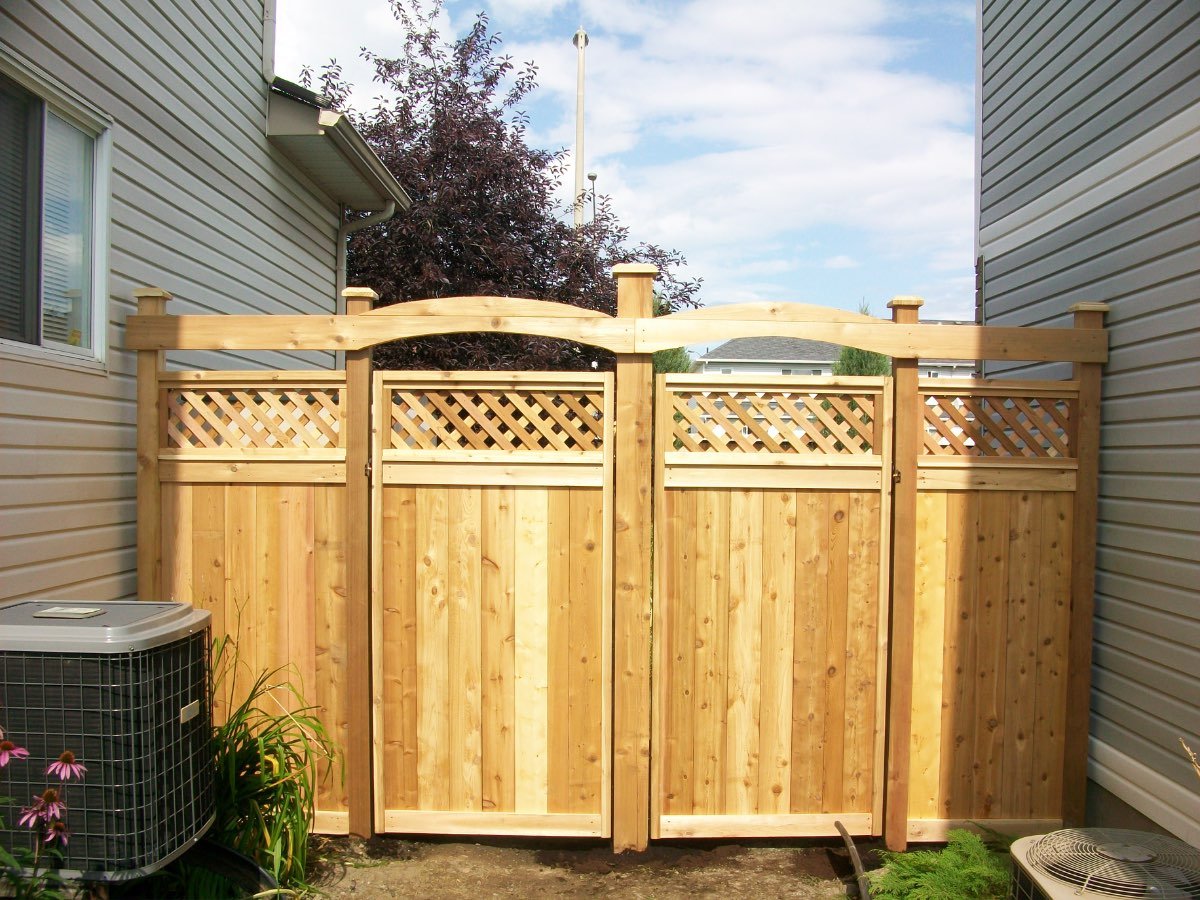
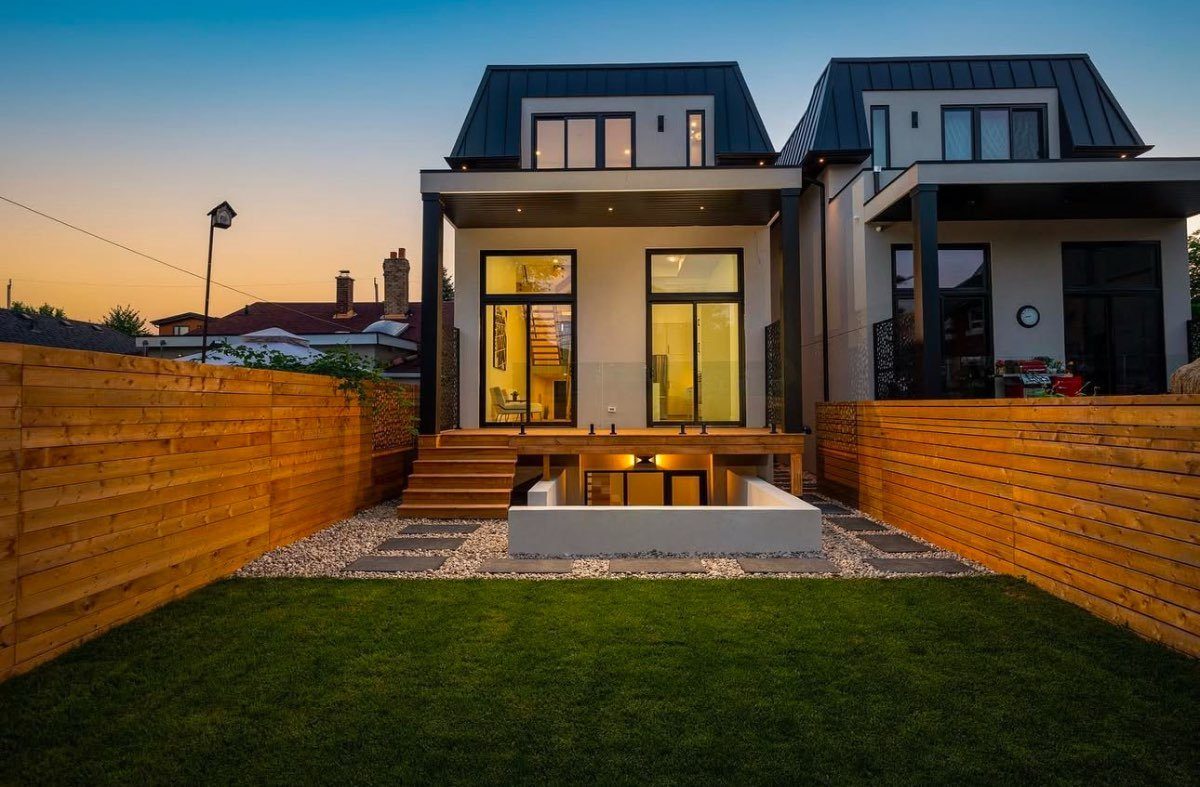
Our project gallery is organised by the type of work rather than by neighbourhood or by material, so we do not claim that a particular photo on this page shows a vinyl fence we built at a named address. On this page that matters more than usual, and we would rather say it plainly: there is no photo in our gallery we can honestly label as vinyl. The nearest one is captioned composite, and captioning it vinyl to fill a slot is not something we are going to do. You can see the full gallery of the work we build, filed by project type.
Where we install vinyl fencing
Ottawa, Kanata, Barrhaven, Orleans, Nepean, Stittsville, Gloucester, Findlay Creek, Vanier and Manotick, and across the river in Gatineau.